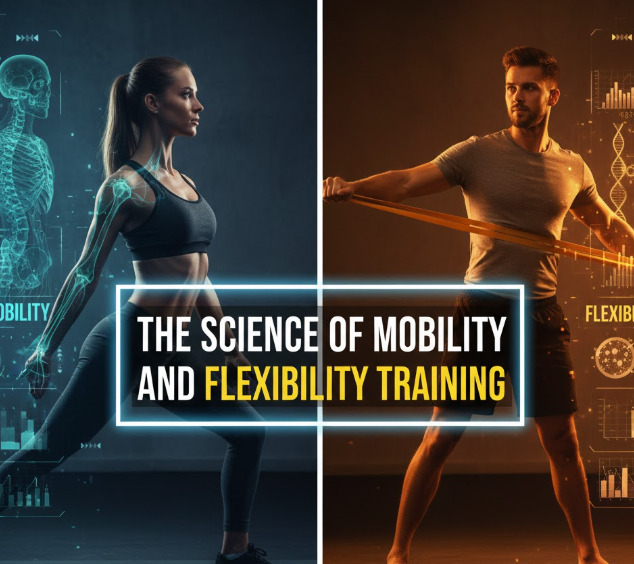

Millions of people wake up daily a little stiff and tight. They cannot touch their toes, their shoulders seem locked up and something as basic as reaching for an item on a high shelf feels bad. That’s not just a matter of getting older — it’s the way our bodies adjust and change to the way we live. Whether you’re an athlete looking to enhance your performance, someone troubled by everyday aches and pains, or even just hoping for moves through life that come more easily, the science on mobility and flexibility has answers that could revolutionize the way your body feels and operates.
The fact is, your body is made to move in a variety of ways. But modern life — sitting at desks, looking at phones, driving cars — keeps us in a box. The good news? Science tells us absolutely how to reverse this process and regain the movement lost.
What’s The Difference Between Mobility and Flexibility
Mobility and flexibility are not sisters, they’re cousins. Flexibility is how much your muscles can stretch when something or someone (like a yoga teacher) moves your body for you, so that they move farther than they would on their own — like when the aforementioned yoga teacher gently pushes your leg closer to your head. Mobility, on the other hand, is all about how much good you can control through your full range of movement with your own strength.
Here’s a way to think about it: you have the flexibility to do a split if you can stretch your muscles wide enough, while mobility is whether you can smoothly lower yourself into that split and get back up without toppling over. Your joints, muscles, nervous system and even the tissue that wraps around everything (fascia) all play a role in coming together to make mobility.
Why This Distinction Matters
If you only train flexibility through passive stretching, it’s possible that you can take impressive positions but not have the strength to control those positions. This is what scientists mean by “unstable flexibility” — your body can be placed into ranges of motion it cannot safely control. Athletes who concentrate merely on becoming more flexible without also creating mobility often stay injured because their muscles become too long without the strength to safeguard joints.
Mobility training gets around this by allowing your body to be both strong AND flexible. It is why physical therapists and coaches today focus on mobility work rather than just stretch.
How Your Body Really Moves: Physical Mechanics
Your body’s system for movement is exceptionally complex, but we can dissect it into manageable parts. Each time you bend, twist, reach — numerous systems flex and stretch in complete harmony.
Muscles and Connective Tissue
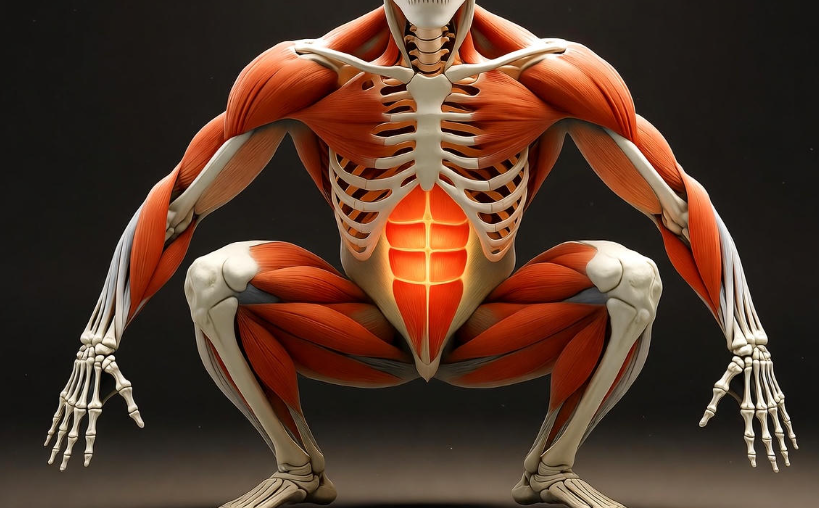
Muscles don’t work alone. They are surrounded by masses of connective tissue known as fascia, which works like an elastic web to hold everything in place. With injury or a long time of not moving in certain patterns, this fascia can get sticky and tight that it actually feels like shrink wrap that’s sitting on something for so long. The reason you feel stiff after sitting for long or when you first wake up is a result of this.
Little sensors in your muscles, the muscle spindles and Golgi tendon organs, are always sending information to your brain about how much your muscles are stretched or contracted. Stretch a muscle and these sensors sense the change, sending signals that can either permit the stretch to continue or trigger a protective reflex that halts it. That’s why you can’t strong-arm flexibility: Your nervous system has panic buttons.
Joints: Where Movement Happens
Your joints — which act as hinges, pivots and ball-and-socket mechanisms — give you the ability to move. Each type of joint has particular patterns of motion for which it is designed:
- Bend and straighten (also called flexion and extension) are the main movements of hinge joints, like elbows or knees
- Ball and socket joints have the most range of motion (can also move side to side, up down, mostly all directions but not 360)
- Pivot joints (such as in the neck) enable rotation
- These joints do smooth movements (such as your wrists)
The surfaces of these joints are coated with smooth cartilage and bathed in synovial fluid that acts as a kind of oil for the machine. When you move often, your body produces more of this fluid and movement is easier and more comfortable. That’s why soft movement can actually be a good thing when you feel stiff — it literally lubricates your joints.
Your Nervous System: The True Emperor of Movement
And here’s a fun fact that most of us are not aware of: 80% of your flexibility and mobility is controlled by your brain and nervous system. Muscles can stretch far more than your nervous system will typically allow. It’s a protective mechanism: Your brain doesn’t want you to reach so far that you pull or tear something, or hurt yourself.
Stretch Reflex – Your Body’s “Emergency Brake”
When you stretch a muscle fast or to an extreme, special sensors activate what’s known as a stretch reflex. This reflex makes the muscle contract to avoid damage. You’ve felt it if you’ve ever bounced in a stretch — imagine how uncomfortable that was; that’s your stretch reflex pushing against you. This is the reason why you don’t see athletes doing ballistic stretching before events; it actually stimulates the very reflex that you want to avoid if your goal is flexibility.
Teaching Your Brain to Trust More Range
It’s not about muscles going “too short,” and lengthening them again; it’s about the nervous system learning that there is a possible range of motion which the body won’t be hurt by taking. That occurs through deliberate practice. When you consistently move and hold at your comfortable edge (not painful, just challenging), your nervous system slowly recalibrates its safety zone. Researchers call this “neural adaptation,” and it’s the reason flexibility can improve far faster than you might think when you train smart.
This is also why your flexibility also goes so fast when you stop training. If you don’t maintain regular movement through full ranges, your nervous system resets its safety thresholds again within a few weeks. But the good news is that you can also get it back fairly quickly—your body “remembers” ranges it’s had in the past.
Train Different and Actually Get Results
Science has looked at a gazillion stretching and mobility methods. Some work well, others are old-fashioned and a few are downright harmful. What, then, does the latest research actually support?
Static Stretching: The Classic Approach
This is a position of stretch and being held without transitioning for 15-60 seconds. The research indicates that static stretching does increase flexibility over time, but that timing is everything. If you do long stretches where you’re totally relaxed before strength training or explosive activities, that static stretching can temporarily reduce power and athletic performance by 5-8%. Your muscles grow more pliable, but less springy.
But static stretching is great after a workout or on its own as a separate session. It is good for relieving muscle tension and relaxation. To get the most out of these stretches, aim to do them for 30-45 seconds each, repeating two or three times.
Dynamic Stretching: Moving Through Range
That means working through your prescribed range of motion in a controlled manner, either repeatedly — like leg swings or arm circles or walking lunges — or multiple times during one stretch. The research keeps coming up: dynamic stretching prior to activity can improve your performance, increase circulation and get your nervous system geared up for movement. It awakens the communications line between your brain and muscles, without compromising power.
Today, dynamic stretching is considered the gold standard for warm-ups in nearly every sport. Research demonstrates it can enhance sprint speed, jump height and agility when done before working out or competing.
PNF Stretching: The Scientific Shortcut
Proprioceptive Neuromuscular Facilitation (PNF) sounds complicated, but it’s incredibly simple and very powerful. You stretch a muscle, then contract it against resistance for 5-10 seconds, and then relax and stretch even farther. This method tricks your nervous system by activating the Golgi tendon organs, which suppress the stretch reflex and permit you to get a deeper stretch.
Studies have shown that PNF stretching can bring flexibility gains more quickly than any other method, sometimes gaining multiple degrees of movement in just one session. The kicker is, it’s intense and needs a partner or equipment to get the best of it.
CARs (Controlled Articular Rotations): The Gold Standard of Mobility
CARs involve moving a joint in a controlled manner from end range to full range of motion while nothing else moves. Such as: Circling your shoulder in the largest possible circle while keeping your body totally still. In the process, this trains the very flexibility and strength to control that flexibility.
Physical therapists and movement specialists now see CARs as one of the best ways to achieve functional, real-world mobility. They are used to benefit the health of joints, develop body awareness and understand limited ranges.
The Science of Stretching: What’s Happening In Your Muscles
There are a number of physical changes that take place on many timescales as you stretch a muscle. In the first few seconds, you’re simply removing that “slack,” if you will, in your muscle tissue — straightening out the wavy fibers. After about 15 to 20 seconds, the muscle fibers themselves start to stretch as proteins within them slide alongside other proteins.
Short-Term vs Long-Term Changes
When you stretch, you receive a window of temporary range that will last for 30 minutes to several hours. This is because your nervous system adapts its sensitivity, and the tissues are more pliable from warmth. Lasting changes would take consistent practice over weeks.
These long-term gains in flexibility stem from three principle adaptations:
Mechanical adaptations: Your muscle tissue forms additional sarcomeres (the basic unit of your muscle fibers), extending the muscle.
Neural adaptation: Your nervous system becomes more tolerant of the stretching.
Fascial structure: The supporting material develops greater elasticity and moisture.
Research indicates that training flexibility 3-4 times a week produces the best gains in flexibility. If you train once a week, you’ll maintain but not gain significant progress. Daily stretching is great, but may not be any better than every other day for most people.
Age, Gender and Genetics: What You Can Change (and Can’t)
Not everyone’s flexibility is the same, and science has pinpointed several factors that determine how easily you can move your body.
Age and Mobility
Young children tend to be highly flexible, with more water in their tissues and less restriction from the nervous systems. Flexibility declines, of course, through adolescence and adulthood; but that’s not inevitable decline — it’s primarily because we move less and with less variety.
Studies on elderly adults indicate that consistent flexibility training can preserve the ability to move or even create improvements in range of motion, even among aged individuals. Some 70-year-olds who work out regularly are more flexible than sedentary 30-year-olds. The point is that older adults have to train more steadily and progress more slowly to prevent injury.
Biological Sex Differences
On average, women tend to be more flexible than men, especially in the hips and lower body. Part of this is because of hormonal differences: estrogen tends to affect the structure of collagen in ways that make tissues more yielding. Women also tend to have broader hip structure, which in turn allows different movement patterns.
However, these are just averages. Lots of men are more flexible than lots of women are. Individual flexibility levels are determined much more by training than by biological sex.
Your Genetic Blueprint
Genetic variations in the structure of collagen can make some individuals more flexible than others from birth. That’s because the collagen is extremely stretchy, forcing the body to compensate by allowing for even greater mobility. At the other end of the spectrum, some people simply have naturally firmer, stronger collagen that won’t stretch.
You can’t change your genetics, but you most certainly can upgrade from where you started. Even those with tight structures can achieve good functional mobility if they train consistently.
The Science-Backed Weekly Building Plan
Here’s what a modern evidence-based program to increase mobility and flexibility looks like, from the literature as it now stands:
| Component | Frequency | Duration | Best Timing |
|---|---|---|---|
| Dynamic Mobility Warm-up | 5-7 days a week | 5-10 minutes | Prior to activity |
| Focused Mobility Work | 3-4 days a week | 15-20 minutes | Separately or after training |
| Static Stretching | 3-4 days a week | 10-15 minutes | Post-workout or standalone |
| CARs Practice | Daily (optional but highly recommended) | 5-10 minutes | Morning or evening |
Building Your Routine
Begin each dynamic movement session with mobility work. This warms your body up in preparation for movement and counts towards regular mobility training. Include 10–15 minutes of static stretching post-strength workout while your muscles are warm. On non-training days, spend a solid 15-20 minutes working on focused mobility to address your restrictions.
The few extra areas where most people could use work: hip mobility, shoulder rotation and ankle flexibility. Invest 60-70% of your mobility time on these areas and 30-40% maintaining everything else.
Common Errors That Keep You From Advancing
Many people unintentionally sabotage their flexibility and mobility gains, even with the best intentions. Here are the biggest mistakes that research and practical experience have revealed.
Stretching Into Pain
It is normal & good to feel discomfort when stretching, pain not so much! Your nervous system gets triggered and it perceives this as danger, and it increases the muscle tension. And that’s the last thing you want. The evidence-based guidance is to stretch up until about 7 out of 10 on a scale of discomfort; you should feel a fairly strong stretch, but be able to keep breathing normally and relax into the position.
Forgetting About Strength
Flexibility without strength is injury risk. Your body needs strength at the end ranges of motion to be able to control those positions safely. Which is why dancers, gymnasts and martial artists spend just as much time on strength work as they do flexibility drills. You should spend as much time training the opposite ranges of motion for each minute you spend stretching them.
Being Inconsistent
Flexibility is a bit like a skill that you have to hone. Going hard once a week isn’t going to be as good as 10 minutes every day. If your nervous system is to believe the new input, it needs lots of repetition that these higher ranges are not dangerous and have a purpose. Three to four good sessions per week are better than one marathon session every seven days.
Holding Your Breath
Your breath creates an immediate state for your nervous system. When you hold your breath, it activates stress responses that promote muscle tension. Studies have found that slow, deep breathing during stretching leads to increased range of motion and faster improvements. Breathe in for 4, breathe out for 6-8 and see your body melt down into really good stretches!
Key Points for Athletes and Exercise Trainees
Athletes want mobility FOR performance, not just to feel loose. The demands are distinct, and so should be the response.
Sport-Specific Mobility Needs
Various sports have unique mobility profiles. Baseball pitchers require insane shoulder rotation and flexibility. Weightlifters require powerful and highly mobile hips, ankles and shoulders under heavy loads. Runners need good hip extension and mobile ankles to stride efficiently.
The science is pretty clear: Train the mobility you need for your sport, but don’t overstretch the areas where you require stiffness to produce power. A 100-metre sprinter isn’t requiring extreme hamstring flexibility—a solid range with a lot of stiffness actually leads to better sprint speeds.
Timing Around Competition
Studies have demonstrated that static stretching within 1 hour prior to an event can cause up to a 3%-8% decrease in power. Elite competitive athletes today spend little time engaging in static stretching on competition days and have shifted their routines toward dynamic movement preparation. Leave the deep flexibility work for training days, not game days.
But after competitive events or tough workouts, stretching can ease soreness and aid in recovery. A 10- to 15-minute cooldown followed by mild static stretching can make a difference in how you feel the following day.
Recovery, Injury Prevention, and Longevity
Injury prevention is one of the most scientifically-backed advantages of mobility training. Research in many sports is confirming that athletes with reasonable mobility in pertinent regions get injured less often than those who don’t.
How Mobility Prevents Injury
With restricted movement at one joint, your body will over-move at another joint. This stress begins to form patterns that cause injury. For instance, stiff ankles cause your knees to absorb more twisting force. If you have poor mobility in your hips, it will cause excessive movement on the lower back — just think about what happens when you squat or run.
Force is distributed evenly through joints if you have good range of motion, so you are less likely to get injured. And studies with runners demonstrate that increasing mobility in the hips and ankles can significantly decrease the risk of knee injuries. The same applies with regard to shoulder mobility and elbow issues among throwing athletes.
The Long Game
One of the most important reasons to train mobility, then, is what scientists refer to as “healthspan” — or the number of years you remain active and independent. Research on older populations indicates that sustaining mobility is one of the most powerful predictors of quality of life in old age.
Those who can squat down to the floor and stand back up without support remain independent longer. People who can reach overhead and twist through their spines are less likely to fall or suffer injury. Mobility training isn’t just about performing — it’s also about moving well in life.
FAQs
How long before there’s a real increase in flexibility?
For most of us, meaningful differences are noticed after 3-4 weeks of regular training (3-4 sessions per week). Your nervous system is the first to adjust, yielding visible early gains in the first few weeks. Muscle and fascia structural changes take 6-8 weeks. Real significant changes typically require 3-6 months of consistent effort.
Should you stretch before or after workouts?
Dynamic stretching prior to your workout will enhance your performance and gets your body ready for movement. Static stretching is best performed after workouts when your muscles are warm, or as a stand-alone activity. Studies have shown that long-duration static stretching before a strength or power workout may temporarily decrease performance.
Can you be too flexible?
Yes indeed, extreme range of motion without strength for support causes instability in the joint and puts you at a bigger risk. That’s why gymnasts and dancers spend a huge amount of time training for strength, not just flexibility. We seek mobile stability — full range of motion with the strength to manage it.
Why am I flexible on one side and not the other?
Asymmetry is completely normal. Most individuals have a preference for one side during most activities which creates imbalances. Right-handed people are usually much tighter in the right hip, left shoulder and have more rotation of the spine. The remedy is to give your tighter side a bit of extra attention (something like 2:1 ratio).
Does weight training make me lose flexibility?
No, this is an old myth. Studies indicate that strength training through a full range of motion actually increases flexibility. The trouble comes when someone trains just some of these ranges – say, only performing half squats or partial curls. Train all the way, and you will gain strength and flexibility at the same time.
How can I tell if I’m stretching properly?
It should feel tight but not painful. You should be able to breathe normally while holding this position in relative comfort for 30-45 seconds. If you’ve got a grimace on your face, you’re holding your breath or shaking, you are using too much force. Dial it back to about 70% of your maximum and take deep breaths.
Moving Forward with Your Body
The science of mobility and flexibility training communicates a simple truth: your body is meant to move in rich, varied patterns, and it pays you back when you respect that fact. You don’t need to be a contortionist or spend hours stretching. You just have to get some movement going through the ranges of motion that you have and build strength in those ranges, and give it time.
Each time you do mobility work, you’re having a conversation with your nervous system — telling it that movement is safe. You’re lubricating your joints, hydrating your tissues and gaining the physical machinery to move through life with grace. Whether you’re 15 or 75, athlete or desk worker, the same rules apply.
Start where you are. Move consistently. Progress gradually. Whatever you give your body as stimulus, it will adapt to. In a few months, what feels hard today will feel easy. You will also get into positions that are inaccessible to you at this time. The stiffness that meets you each morning will disappear to become fluent, relaxed motion.
Science has already provided us the blueprint. Now it’s simply about putting in the work, believing in the process and having fun in the journey of discovering where your body can go. For more comprehensive information on effective stretching techniques, you can visit the American College of Sports Medicine guidelines.