
You have heard it a thousand times: “Be sure to stretch!” Whether you’re going to the gym, for a run or playing your favorite sport, it appears that stretching is involved in every fitness regimen. But why? Have you ever wondered? What is actually going on inside your body when you stretch, and is there any benefit?
The fact is that stretching is not just about touching your toes or being able to get into fancy yoga poses. So there is truly science going on underneath your skin — with muscles, nerves and yes, even your brain getting in the game. Certain types of stretching can make you more powerful and reduce your risk of orthopedic injuries, helping energy get to the muscles through the fascial and muscular lines better.
In this article, we’re going to dissect everything you’ve ever wanted to know about stretching. You will learn about what occurs in your muscles when you stretch, the effects of stretching before and after exercise, and which approaches are the best for different scenarios. You’ll be much more clear by the end of how to make stretching type work for your goals.
What You Do When You Stretch (And What Happens to Your Muscles)
Imagine your muscles as rubber bands. Cold and tight, they do not stretch very far. But hot and bendy, they can stretch much further before they break. Your muscles do the same, but there is a lot more happening than you may realize.
The Basic Muscle Structure
Your muscles consist of thousands of tiny fibers that are bundled together. Those fibers are made up of even smaller ones, called sarcomeres, which act as little building blocks that slide against one other to contract and relax your muscles. When you stretch, basically what you are doing is pulling these sarcomeres apart and stretching out the whole muscle.
But it isn’t just muscles that are involved. They are enveloped in a strong, stretchy tissue known as fascia. Picture fascia as a layer of plastic wrap around your muscles—it holds everything together, but it can get tight and sticky if you don’t move around enough. To help keep this fascia flexible and smooth, stretching is effective.
Your Nervous System Is a Key Player
Here’s where it gets interesting. Your muscles are equipped with special sensors known as muscle spindles and Golgi tendon organs. They act as small alarm systems that signal your brain how much your muscles are stretching.
When you stretch slowly and hang out there, on the other hand, your muscle spindles will first tell your brain “Hey! We’re being stretched!” Your brain may react by causing a muscle to contract just a tiny bit to shield it. But if you sustain the stretch for around 30 seconds or more, another sensor — the Golgi tendon organ — kicks in. This one says something else: “We’re going to be fine now.” This is known as the inverse stretch reflex, and it’s why a stretch becomes easier to hold after a few seconds.
Blood Flow and Flexibility
Stretching also helps increase blood flow to your muscles. This helps bring fresh oxygen and nutrients to your body, as well as carrying away waste products. Over time, stretching those muscles can also increase your range of motion — the extent to which you can move your joints through their natural position — by making your muscles and connective tissues more pliable.
Static Stretching vs. Dynamic Stretching: What’s the Difference?
Stretching is not one-size-fits-all. Indeed, performing the wrong kind at the wrong time can harm performance more than help. Let’s divide into the two primary types.
Static Stretching: The Hold-and-Wait Method
It’s static stretching that most people think of when they say stretching. You position yourself and remain fixed there for 15-60 seconds. Examples include bending over to touch your toes and hold, or pulling your heel into your butt to stretch the thigh.
This type is a great way to increase flexibility with continued use, and it’s perfect for post-exercise cooldowns. But studies have found that static stretching prior to high-intensity activities, like sprinting or jumping, can temporarily decrease your muscle power by 5-8%. That’s because if you hold a stretch too long, it can make your nervous system relax and decrease muscle activation.
Dynamic Stretching: Movement-Based Warm-Ups
Dynamic stretching is moving one or more limbs through full range of motion on the joint multiple times. You know the kind of movement I’m asking for: Think leg swings, arm circles or walking lunges. It’s not that you have a stance —you’re always moving.
This variety is great before you exercise: it heats up your muscles, dilates blood vessels and primes the nervous system. Research shows that dynamic stretching can increase power, speed and agility when done as part of a warm-up regimen.
Comparison Table
| Feature | Static Stretching | Dynamic Stretching |
|---|---|---|
| Motion | Hold position still | Constant motion |
| Best Timing | After exercises | Before exercises |
| Duration of stretch | 15-60 seconds | 10-15 repetitions |
| Primary Benefit | Increases flexibility | Improves performance |
| Effect on Muscles | Relaxes and lengthens | Activates and warms |
| Example | Hamstring toe touch | Leg swings |
Stretching Before Exercise: Does It Prevent Injury?
For decades, athletes warmed up the same way before every game or practice — by sitting and holding stretched arms, legs and torso in various positions. Modern science has turned this notion on its head.
The Issue with Pre-Workout Static Stretching and Performance
Each benefit is worth squinting at, the history of exercise having shown that most benefits have a downside: multiple studies support more or less directly the idea that static stretching before an explosive-appendage workout will temporarily yield you less strength and power. In one review of research, holding a stretch for longer than 60 seconds was connected to a reduction in muscle strength by an average of 5.5 percent.
Why does this happen? When you hold a stretch for too long, your nervous system leaps into what we call “relax mode.” Your muscle spindles grow less sensitive, and your muscles don’t contract quite as forcefully. If you’re about to hit the ground running, jumping or lifting something heavy, that’s not what you want.
The Right Way to Warm Up
Rather than static stretching, your preworkout routine should consist of dynamic moves to limber up the muscles that you will put into action while exercising. Here is an effective warm-up:
General cardiovascular warm-up (5-10 minutes) – brisk walking, shuttle runs or a few minutes on a stationary bike to get your body temperature up.
Dynamic stretches (5 to 8 minutes): Sport-specific movements that send your joints through a full range of motion
Activity-specific drills (3-5 minutes): Low-effort versions of the exercises you’ll perform in your main work set.
Examples of Dynamic Warm-Up Exercises
Leg Swings: Stand and hold a wall then swing one leg forward and backward, next side to side
Arm Circles: Make large circles with your arms, progressively getting bigger and bigger.
Walking Lunges: Take a step, so you fall into a lunge and then alternate legs as you take each step.
High knees: Run in place and bring your knees up to your chest
Butt kicks: Jog in place and kick your heels up toward your glutes
Trunk twists: Twist your torso from side to side, keeping arms extended.
When to Static Stretch Before Activity
There is one exception: if you have especially tight muscles that restrict your range of motion for a certain exercise, short holds (stretching 10-15 seconds, then moving in and out of it) can still be helpful. For example, if tight hip flexors inhibit a proper squat then doing a quick hip flexor release will have you changing your squat technique according to that new length.
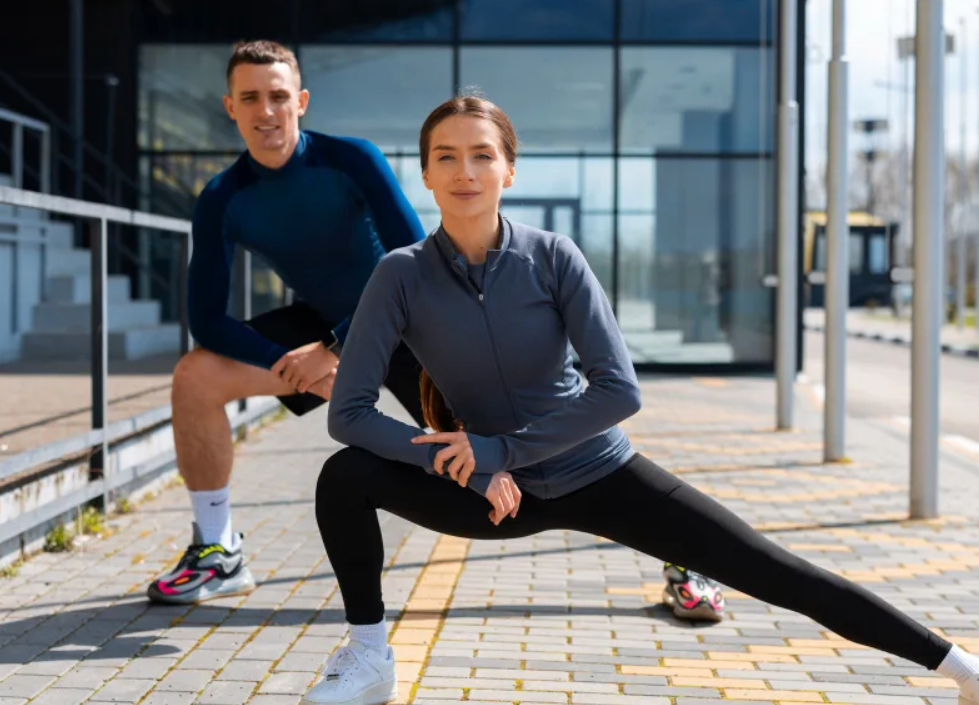
Stretching After Exercise: Does It Aid in Recovery?
Once you complete a workout, your stretching routine should be completely different. This is where static stretching comes in.
How Post-Workout Stretching Helps Recovery
When you’ve just had a good workout, your muscles are warm and fatigued — many of them are also tight. Now is perfect time for static stretching as:
Decreases muscle tension: When you exercise, your muscles contract over and over. Stretching helps the muscles get back to their normal resting length
Better flexibility: Warm muscles become more pliant and are much easier to stretch safely than cold ones.
Encourages relaxation: The soothing effect that hinders performance pre-workout, in fact, assists recovery post.
Stretching may decrease muscle soreness: the research has been mixed, but some studies have found that stretching could reduce delayed onset muscle soreness (DOMS.)
The Flexibility Factor
If your aim is to become more flexible — whether that means doing the splits, enhancing your yoga practice or just moving with greater ease — post-workout is your golden opportunity. With your muscles and fascia warmed up and pliable, it’s the safest and most productive time to work on expanding range of motion.
How Long to Hold Stretch After Workout?
While this can vary, both are long enough to actually see results. Studies have shown that 15 seconds of stretching is effective. How long should you stretch? For most people, around 30 seconds per stretch. You should feel a little pull in the muscle, but never pain. If you feel something sharp or burning, you’ve gone too far.
Sample Post-Workout Stretching Routine
Targeting the large muscle groups that you targeted during your workout:
Hamstrings: Extend legs, sit and reach toward toes (30 seconds)
Quadriceps: Balance on one leg, grab opposite heel to glutes (30 seconds each side)
Calves: Lean back on one foot, heel pressed into the ground (30 seconds each side)
Hip flexors: Kneel with one knee down and push hips forward (30 seconds per side)
Chest: Interlace hands behind back, reach arms up (30 seconds)
Shoulders: Hold each arm across your body (for 30 seconds on both sides)
Lower back: Lying on back, pull knees to chest (30 seconds)
Common Stretching Myths Debunked
Let’s dispel some long-held myths about stretching.
Myth 1: “Stretching prevents all injuries”
There are a lot of people that think stretching before performing exercise helps to prevent injuries. The reality is more complicated. Warm-ups and particularly pre-workout stretches (at least dynamic stretching) can help reduce risk of injuries, but just doing static stretching doesn’t offer very much protection. Injuries can be the result of bad technique, overtraining or an unexpected motion — not only tight muscles.
Myth 2: You’ve Got To Stretch Until It Hurts, Right?
The old adage “no pain, no gain” does not apply to stretching. You should feel tension or perhaps mild pulling; what you should not be feeling is anything sharp. It can in fact tear muscle fibers or injure connective tissue, and then you’ve set yourself back further on the road to flexibility.
Myth 3: Everyone Should Be Able to Touch Their Toes
There’s no need to worry if your fingertips don’t reach the mat. Everyone has different body types, muscle lengths and flexibility. Some people will never be able to comfortably touch their toes, and that’s O.K. The goal is not to have contortionist-level flexibility for your activities and daily life.
Myth 4: Stretching Can Get Rid Of Muscle Soreness
Although stretching when you’re sore often vaguely feels good, and it can temporarily relieve that tightness, research doesn’t show that it will significantly reduce delayed-onset muscle soreness (DOMS) — the achy feeling you’ve got 24 to 48 hours after a workout. The best ways you can manage soreness is to simply progress slowly with your training, eat right, sleep well and do light work on days of rest.
Special Types of Stretching Techniques
In addition to basic static and dynamic stretching, there are a variety of other mobilization methods that may benefit in certain circumstances.
Ballistic Stretching: The Bouncing Method
They include bouncing-type movements that take the body past its regular range of motion. For instance, bouncing while attempting to reach your toes. The stretch reflex can be triggered if you bounce and your muscles tighten instead of relax. It also increases injury risk.
But some high-level athletes in sports that demand explosive movements (such as gymnastics or martial arts) do some kind of controlled ballistic stretching under the supervision of a professional.
Proprioceptive Neuromuscular Facilitation (PNF): The Contract-Relax Technique
PNF stretching is a more advanced form of flexibility training that involves both the stretching and contraction of the muscle group being targeted. Here’s how it works:
- Stretch it to the max
- Hold that muscle tight for anything from 5-10 seconds (as if pushing against an unmovable object or perhaps a partner)
- Relax the muscle completely
- Stretch it further than before
This exploits the inverse stretch reflex we learned about earlier, and can result in some big flexibility gains. It’s frequently prescribed in physical therapy and often used by serious athletes. Learn more about PNF stretching techniques and their benefits.
Foam Rolling: Self-Myofascial Release
Foam rolling (which despite stretching falls into its own category) has exploded in popularity as a means to warm up and cool down. When you roll your muscles across a foam cylinder, that pressure can help to relax taut fascia, restore blood flow and decrease muscle tension.
Studies show that foam rolling pre-exercise can improve flexibility with none of the performance-impairing effects of static stretching. It’s also excellent for recovery, perhaps reducing muscle soreness and enhancing range of motion.
Creating Your Personal Stretching Plan
Now that you understand the science, let’s apply it to your routine with tips on what to do.
Before Your Workout
- Begin with 5-10 minutes of light cardio to increase your body temperature
- Do 5-8 minutes of dynamic stretching of the muscles you will be using
- Include sport-specific activity that replicates what you are about to do
- Skip the static stretching if you’re not tight in these areas
- Work up to high intensity — don’t go all out off the bat
After Your Workout
- Cool down with a few minutes (3-5) walking or easy spinning
- Do a static stretch for all of the major muscles utilized
- Longer holds if necessary, PREVENT BOUNCING
- Take deep breaths and settle into each stretch
- Try a little foam rolling on any especially tight areas
Daily Flexibility Work
If increasing general flexibility is desired, have stretching sessions apart from lifting ones:
- Pick the moment when you’re warm already (i.e. after a shower, or low-key activity)
- Run through a total body routine for all of the major muscle groups
- Hold stretches for 30-60 seconds
- If you really do try to derive pleasure from focused stretching 3-5 times per week, aiming for 10-15 minutes
- Have patience (which means flexibility does not happen in one day but weeks or months)
Age and Level of Activity Are Factors in Your Need to Stretch
Your stretching regimen should play to wherever you exist in life.
Teenagers and Young Adults
Most younger people are naturally more flexible, however, range of motion exercises will still help them:
- Maintain flexibility during growth spurts
- Support athletic performance
- Establish healthy exercise habits
- Avoid sports repetitive stress injuries
Adults (30-50 years)
As we age, flexibility decreases which means more stretching becomes necessary:
- Concentrate on preserving active movement for functional activities
- Pay particular attention to known tight areas (hips, lower back, shoulders)
- Counteract desk work and sitting habits with stretching
- Stretching and strength training are best together
Older Adults (50+ years)
And flexibility is key to independence and quality of life:
- Stretching on a regular basis assists in keeping up the balance and mobility
- Minimizes the risk of falls by aiding in coordination
- But incorporating some stretching with low-impact exercise, such as gentle yoga or tai chi may have benefits
- Remember to warm up by leading with a brisk walk or a few minutes of jogging before stretching; older muscles do not stretch as well
Stretching for Various Types of Exercise
Runners and Cyclists
Focus on lower body flexibility:
- Leg swings and lunges, dynamic ones in particular before runs
- Static hip flexors, quads, hamstrings and calf stretches following
- Note: Pay particular attention to IT band and glute flexibility
Weightlifters
Mobility is necessary for good form:
- Dynamic stretches for shoulders, hips and ankles before lifting
- Add exercises specific to the movement (empty bar warm-ups)
- After training, there should be static stretching session to the major muscle groups
- Add specific mobility sessions sandwiched between lifting days
Team Sports Athletes
Prepare for multi-directional movement:
- Dynamic warm up should include forward, backward and lateral movements
- Add sport-specific drills (shuffles for basketball, cuts for soccer)
- Post-game stretching for all major muscle groups
- Stretching for prevention of muscular imbalances
Yoga and Flexibility Training
Stretching is the main activity:
- Don’t forget to warm up with some easy movements first
- Work from simpler to more complex poses
- Lengthen Hold times (45-60 seconds or longer)
- Focus breathing and relaxation to safely stretch further

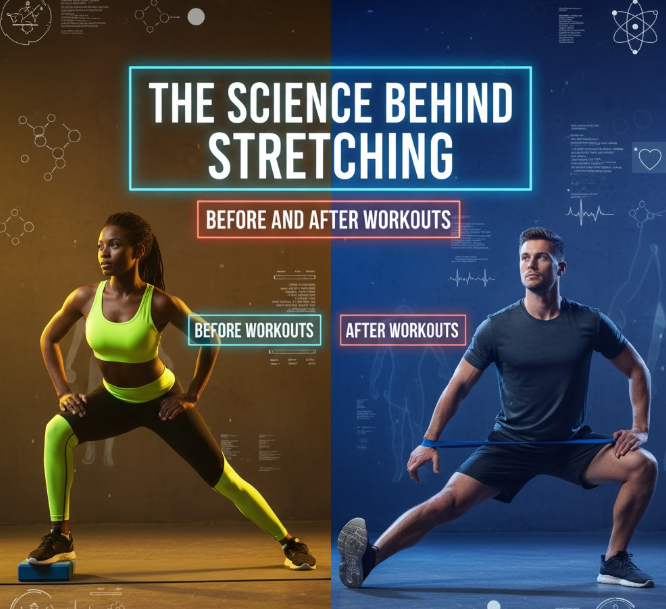
The Science Behind Stretching Before and After Workouts
Frequently Asked Questions
How long should I stretch before exercising?
Ah, then there’s the warm-up you do before a workout: 5-10 minutes of light cardio and another 5-8 with dynamic stretching. Limit holding static stretches for longer than 10-15 seconds prior to a workout as muscle power may temporarily be compromised.
Should stretching be avoided all together?
Another loss you probably won’t learn about right away if you don’t stretch is morning stiffness, which can over time set in as your muscles lose flexibility and become tight, potentially limiting your range of motion. A good warm up before you exercise and cool down after are crucial for joint health and performance in the long run.
Can stretching make you taller?
No, you cannot permanently increase your height with stretching. Even if it does feel good for a moment to stretch and temporarily elongate your spine, even decompressing it so you stand a little taller, stretching does not alter bone length or the structure of your entire skeleton.
How frequently should I stretch to increase flexibility?
To have visible results, you must stretch a minimum of 3-5 times a week. Stretch each one for 30-60 seconds and repeat 2-3 times on each. It’s not really how hard you do it; the key is simply to consistently maintain a loose, open range of motion.
Is it OK to stretch if my muscles are sore?
Light, gentle stretching is good while you are sore, but don’t go for aggressive stretching of a tightly sore body part. Keep it light and move around, or maybe do a little static stretching. Keep in mind that stretching isn’t what’s going to rid you of soreness — active recovery like walking or easy swimming can be more beneficial.
Should I stretch in the morning or evening?
Your body is generally more stiff in the morning, so stretching any time of day can feel harder in the A.M., but also can be helpful to counteract overnight tightness. It is easier to stretch in the evening, as your body has already warmed up from a day of activity. Anytime is when you are going to do it on a consistent basis, as both offer advantages.
Can you overstretch?
Yes, overstretching can harm muscles, tendons and ligaments. Signs may include severe pain, burning or joint instability. Always stretch only to gentle tension, not pain, and proceed gradually over weeks and months, not by attempting to force an immediate result.
Am I supposed to warm up before stretching?
For static stretching sessions (not done after your workout), yes. It’s a fact: cold muscles are more susceptible to injury. Static stretching should be preceded by light cardio; 5-10 minutes of walking or low-intensity cycling will do the trick. This elevates your body temperature and sends more blood to muscles.
Wrapping It Up: Your Stretching Plan
Not to be all limber than thou (because this is a very annoying way of being) but stretching isn’t just something you do because everyone tells you that it’s good for you. It’s a science-supported practice that, when performed correctly, prepares your body to move, helps it recover and preserves the flexibility you require for sports and daily living.
The takeaways are simple: warm up with motion, not stillness. Hold those long stretches for after your workout, when your muscles are warm and receptive. Consistency over Extreme — Stretching frequently in small doses is better than infrequent hard/long sessions.
Always keep in mind that you have only one body. What one individual works for your friend or others might not work exactly the same for you. Pay attention to how your body reacts, and remember you can always fine-tune your routine – or try out new methods altogether.
Whether you’re an athlete training for peak performance, or just someone trying to stay active and healthy — or somewhere in between — understanding the science of stretching helps you make smarter choices. Your muscles, joints and future self will be waving at you with thanks for allowing enough time to stretch appropriately.
Start small if you are new to structured stretching. Simply incorporate five minutes of dynamic movement before your workouts, and another five minutes of static stretching after them. When these behaviors are second-nature, then you can branch out in your routine. The main thing is to get going—once you make that first stretch, you’re on your way to improved movement and flexibility.