
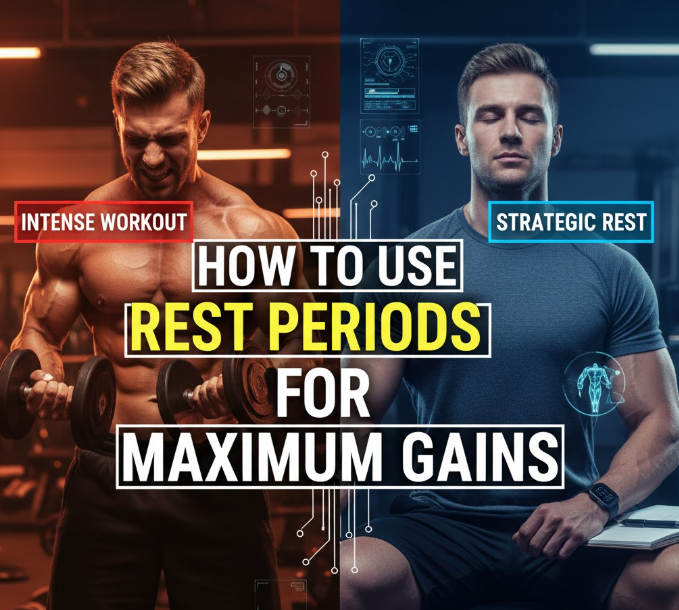

You hit the gym, preparing to smash the workout. You complete your first set of bench presses, and then what? Do you go right into another set or pick up your phone to scroll through Instagram for five minutes? As a matter of fact, what you do in between sets can be the difference maker for where you end up.
Rests are perhaps the most ignored component of training. What most people think is the only thing that matters, is how hard you push when it’s your turn. But the reality is, how much time you spend sitting around when you’re not exercising can have a huge impact on building muscle, getting stronger and increasing your overall fitness. Not enough rest, and you won’t play your best. On the other hand, too much rest, and you may not provide the conditions for growth to occur.
This article will teach you how to use rest periods specifically to crush each and every workout. If your goal is to gain muscle, become stronger or just develop greater endurance here are some tips that can help you get there faster.
Why Rest Periods Actually Matter
Think of your muscles as a rechargeable battery, Dr. Haun explains. When you lift weights, you are slowly draining that battery. Rest periods replenish your muscles so you can perform well on your next set.
When you’re exercising, your body dips into energy reserves in the muscles. Depending on how much you’re working and how hard, this energy comes from different systems. While you rest, your body restores that energy and clears out waste products such as lactic acid that accumulate during exercise.
But the breaks do more than just let you rest. They also affect:
Muscle growth signals – How long you rest changes the hormones that your body releases and the signals it provides your muscles to grow.
Volume of training – If you’re getting too little rest, you may not be able to do as many reps, which translates into less total work for your muscles.
Mental focus – Your brain needs recovery just like your body. Quality rest can help you stay in the game and keep good form.
Injury prevention – When fatigued, you are rushing between sets leading to bad form and injuries.
The challenge is to find the sweet spot that works for your own particular goals.
Different Goals Require Different Rest Periods
Not all workouts are designed the same, and neither are rests. What’s good for getting bigger biceps is not the routine if you are in training for a marathon. Here’s how to align your rest periods with your goals.
Building Muscle Size (Hypertrophy)
If building bigger muscles is your main objective, you’re looking for rest periods of 60-90 seconds for most exercises. This may sound short, but there is good science behind it.
If you rest 60 to 90 seconds, you establish something known as metabolic stress. Your muscles never get a full recovery, so when you start the next set, they’re already a little tired. This makes your body call in more muscle fibers to get the job done.
This moderate rest interval also places your muscles under tension for more total time. And if you are doing 4 sets with a minute of rest, your muscles are being recruited for less than a quarter of the time they would be on one repetition maxes and 5-minute breaks between work.
But for larger compound movements, like squats or deadlifts, you might need 2-3 minutes. These involve working your muscles in more than one direction of movement and deplete your energy systems more quickly.
Sample muscle-building rest schedule:
- Isolation exercises (such as bicep curls, leg extensions): 60 seconds
- Compound Movements (bench, rows): 90 seconds
- Heavy compound lifts (squats, deadlifts): 2-3 minutes
Getting Stronger (Strength Training)
Strong is not a function of how big your muscles are. When you’re training for maximum strength, though, you’re teaching your nervous system to recruit muscle fibers more efficiently and lifting a lot heavier weights.
You can’t lift the weights with just a few seconds of rest—you need to rest for 3-5 minutes between sets. This will allow your nervous system time to recover, but also your ATP-PC energy system (your body’s most powerful however shortest lasting energy source) to fully replenish.
Think of it like sprinting. You can’t sprint your best if you only rest 30 seconds. Your work sets of strength movements are no different—the fresher you are, the more weight you get up.
Strength training rest guidelines:
- Heavy compound lifts (80-90% of your max): 3-5 minutes
- Moderate loads (70-80% of your max): 2-3 minutes
- Accessory work: 90-120 seconds
Improving Endurance
If you’re doing training to improve endurance—in sports, cardiac health or overall fitness—short rest periods are your friend. By maintaining the breaks short—30-60 seconds—you keep your heart rate higher and train your body to perform while feeling tired.
For endurance training, taking short rest periods during workouts helps boost your heart health and trains your muscles to clear away waste products. This is known as work capacity, and it’s critical for anything that demands an extended effort.
Circuit training, in which you go from one exercise to another with little or no rest, is great for boosting endurance. You may then keep rest periods as short as 15-30 seconds between exercises, and only take longer 60-90 second breaks once you’ve finished a full circuit.
Burning Fat
For fat loss, rest periods should be kept on the shorter side—with an aim being between 30-60 seconds. This also keeps your heart rate higher throughout, helping you burn more calories both during and after your workout.
Less rest means more metabolic work. It takes more effort for your body to recover between sets, so you’re burning more energy. And, combining cardio during strength training is a two-for-one way to work your heart.
But don’t sacrifice form and safety just to keep rest periods low. If you’re so spent that your technique will go down the drain, take all the time you need.
Rest Periods by Exercise Type
| Type of Exercise | Recommended Rest | Rationale |
|---|---|---|
| Heavy Squats/Deadlifts | 3-5 minutes | Full CNS Recovery |
| Bench Press/Overhead Press | 2-3 minutes | Multiple Muscle Groups |
| Rows/Pull-ups | 2-3 minutes | Back needs time to recover |
| Isolation (Biceps or Triceps) | 60-90 seconds | Single muscle group |
| Core/Abs | 30-60 seconds | Smaller muscle groups, faster recovery |
| Calf Raises | 60 seconds | Small muscle group |
| Cardio Intervals | Varies | Depends on interval length and difficulty |
The Science Behind Active vs Passive Rest
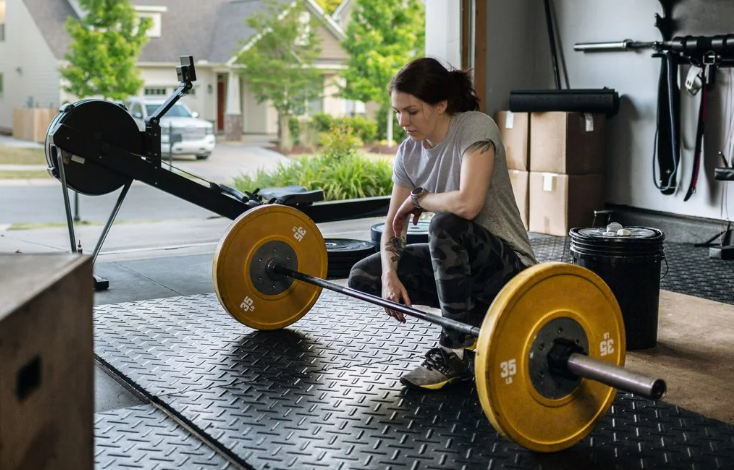
All rest is not created equal. You can rest either passively (standing or sitting still) or actively (moving around lightly). Each type has its benefits.
Passive rest is when you’re totally motionless in between sets. This offers you the most physical recovery and is ideal when you’re lifting heavy or working really intensely. Your system can throw all its resources at recovering your energy systems.
Active rest refers to light movement between sets such as walking around, or possibly engaging in easy movements. This helps blood from pooling in your muscles, and can help flush waste products out of them more quickly. Active rest can be useful for lighter training sessions; it also may help you stay warm and be mentally focused.
Passive rest is best for most strength and muscle-building workouts. Save active rest for lighter days or when you’re circuit training.
How to Time Your Rest Periods Perfectly
Here’s a common mistake: people believe they’re resting for one minute when it is actually 90 seconds, or more. Or they lose focus and rest for 3 minutes when their intention had been to rest for a minute.
Set a timer on your phone – Set a timer at exactly how much time you want to rest. A lot of workout apps come with preprogrammed rest timers that facilitate this.
Be consistent – Rest 60 seconds on your first set, then rest 60 seconds between ALL sets. When it comes to monitoring progress, you also owe it to yourself not to vary your rest times so that you can find out where exactly you’re making gains.
Don’t get distracted – You could easily begin reading messages or talking to someone and lose track of time. Resist the urge to get distracted during your rest intervals.
Make adjustments as necessary – If you find that you’re just consistently not hitting your sets, maybe work in more rest. If by the end you feel just as strong as you did at the beginning, you may need less rest.
-
🔥 Is lactic acid really the reason for muscle burn? Find out: The Truth About Lactic Acid and Muscle Burn
Progressive Rest Period Strategies
When you have the hang of basic rest periods, give advanced tactics a try to further increase your gains.
Rest-Pause Training
This is the act of doing a set to near failure, then resting just 15-20 seconds before performing a few more reps. You could even do this 2-3 times in one “set.”
You could, for example, complete 8 reps of dumbbell presses, rest 15 seconds, finish with an additional 3 reps and another rest pause of 15 more seconds before grinding out the last couple. This produces intense muscle tension and a huge metabolic stress.
Decreasing Rest Periods
Over several weeks of practice, you’ll be able to systematically reduce rest periods and maintain the weight. Density training is also a wonderful way to continue making progress without constantly throwing more weight on the bar.
Begin with 90-second rests and each week, if possible, aim to reduce by 10 seconds until you hit 60 seconds.
Contrast Rest Periods
In response, some lifters rest longer early in their workout when they’re fresh, but shorten up the break as the workout progresses. This enables you to generate higher weights when you’re at your freshest, while still eliciting metabolic stress later in the workout.
Rest Period Mistakes To Avoid
Not taking enough rest on heavy lifts – This is unsafe. When you push hard—especially when working near your maximum weight—you need full recovery to maintain good form and avoid injury.
Resting too long for muscle growth – 5-minute breaks between bicep curls don’t get the job done. You want some fatigue accumulation for hypertrophy.
Inconsistency – Varying rest periods haphazardly makes it impossible to track progression, or lack thereof.
Don’t listen to your body – There may be days where your body needs extra recovery. Be flexible with rest periods if you’re ill, tired or stressed, or if you slept poorly.
Comparing yourself against others – Everyone’s rest period may not be right for you. A well-conditioned athlete may require less rest than someone new.
Rest for Various Levels of Training
Beginners
If you’ve never trained this way before, use longer rest periods. Lifting weights is something your nervous system isn’t accustomed to and you require more recovery.
How to do it: Rest 2-3 minutes between all your exercises at first. This allows you to prepare mentally for each set and also to keep good form. Once you get more comfortable (about 2-3 months in), you may begin to play around with shorter rest periods on certain exercises.
Intermediate Lifters
After you’ve been a regular at the gym for 6-12 months, you can use the normal rest period guidelines based on what your goals are. Your body has adjusted to training stress, and you can rest a little less on hypertrophy work (yet still allow enough time for heavy lifts).
Advanced Athletes
Lifters with more experience often need to get more creative with rest periods in order to keep making progress. You could incorporate different rest periods within the same workout or week to week as a part of periodized training.
Special Situations and Considerations
Training with a time crunch – If you can only afford 30 minutes to train that day, you may need to use supersets (performing two exercises back-to-back) or reduce your rest periods. If you want to, then fine … but know that it may decrease your strength gains a bit.
Training in the heat – The heat will take a toll on you and dehydrate you. When you’re training in hot conditions, you may need slightly longer rest periods.
Cutting weight and training – You recover less between sets when you get fewer calories. Your regular rest intervals may need to be increased by 15-30 seconds.
Age factor – Older athletes usually require longer rest between sets. If you’re in your 40s, add 30-60 seconds to the suggested rest times.
Keep Tracking Your Rest Periods
Track your rest periods in addition to your sets, reps and weight with a workout log. Review your logs after a few weeks. Ask yourself:
- Am I hitting ALL of my planned reps?
- Am I massively degrading in performance on subsequent sets?
- Do I feel like I am improving from week to week?
- How do my workouts feel and how do I feel after?
If you’re unable to reach your rep targets after a few workouts, try adding 15-30 seconds of rest. And if your final set seems as easy as your first, consider reducing rest by 15 seconds.
For more information on optimizing your workout routine, check out this comprehensive guide to strength training.
Sample Rest Period Workout Plans
Muscle Building Day:
- Squats: 4 sets of 8 reps (Rest for 2 minutes)
- Romanian Deadlifts: 3 × 10 (90 seconds rest)
- Leg Press: 3 x 12 (90 seconds rest)
- Leg Curls: 3 x 12 (60 seconds rest)
- Calf Raises: 4 x 15 (60 seconds rest)
Strength Day:
- Deadlifts: 5 x 3 (4 minutes rest)
- Bench Press: 4 x 5 (3 minutes rest)
- Barbell Rows: 4 × 5 (3 minutes rest)
- Pull-ups: 3 x max reps (2 minutes rest)
Fat Loss Circuit:
Complete 3 rounds with 30s rest between exercises and 90s rest between rounds:
- Goblet Squats x 12
- Push-ups x 15
- Dumbbell Rows x 10 each side
- Plank x 45 seconds
- Kettlebell Swings x 15
How to Use Rest Periods for Maximum Gains
Frequently Asked Questions
What if I rest too long between sets?
Overresting—sitting or lying around for too long between exercises—is not harmful, but it’s an easy way to make your workouts less effective. For muscle building, going over 5 minutes means you lose out on metabolic stress that helps stimulate growth. You’re also going to spend more time in the gym than you need to.
Can I use my phone between rests?
You can, but be careful. It’s a recipe for distraction and losing track of time. If you’re using your phone, keep to setting timers or tracking results from your workout. Leave social media for after your workout.
Should Your Rest Periods Be Different for Upper Body And Lower Body?
In general, lower body exercises require a little more rest because they work larger muscle groups and are harder on your whole body. Incorporate 30-60 extra seconds to lower body movements vs. exercises for upper body.
Do I need to rest during warm-up sets?
You can rest less between warm-up sets than you do working sets—30-60 seconds is usually fine. The point is simply to warm up your muscles and nervous system, not to fatigue them.
What if I want to go before my timer is finished?
Hold out for the full rest if you’re doing a strength workout, even if you feel ready to go. Your nervous system needs to recover. It is fine to get going a little early if you are doing hypertrophy or endurance training.
Do I rest more on my first exercise or last?
Your rest periods for the same exercise should be uniform during your training. But your first major exercise could have longer rests (it’s generally the heaviest), and then your later accessory exercises might work with shorter ones.
Can rest intervals help me get past plateaus?
Absolutely. If you’ve stalled in your progress, experiment with rest periods. Rest more to gain strength, rest less if hypertrophy is your goal or use progressive methods such as rest-pause training.
How much do rest intervals impact muscle soreness?
Shorter rest periods tend to induce greater metabolic stress and may generate more soreness, especially if you’ve recently started modifying your rest times. This soreness, however, is not necessarily indicative of better results.
The Final Word on Rest Between Sets
Rest periods are a powerful tool that nobody wants to use. By aligning your rest timings with your specific goals, you can enhance your results to a large extent without making any changes in the way you are training in other aspects.
Remember these key points:
- Build muscle with 60-90 second breaks (2-3 minutes for big lifts)
- Get stronger with 3-5 minute rests on heavy exercises
- Progress endurance using 30-60 seconds of rest
- Use a timer to stay consistent
- Adapt according to exercise and your level of experience
The best rest for YOU is the one that allows you to reach YOUR goals while staying injury-free and progressively advancing. Begin with the recommendations in this article, then modify them according to your body’s response.
Stop guessing about rest, and start applying it strategically. This one simple modification could be the missing link to getting you off your plateau and back on track with your goals. You have gains on the line—you just need to rest smart to get them.