
Train Smarter with Kinetic Chain Awareness
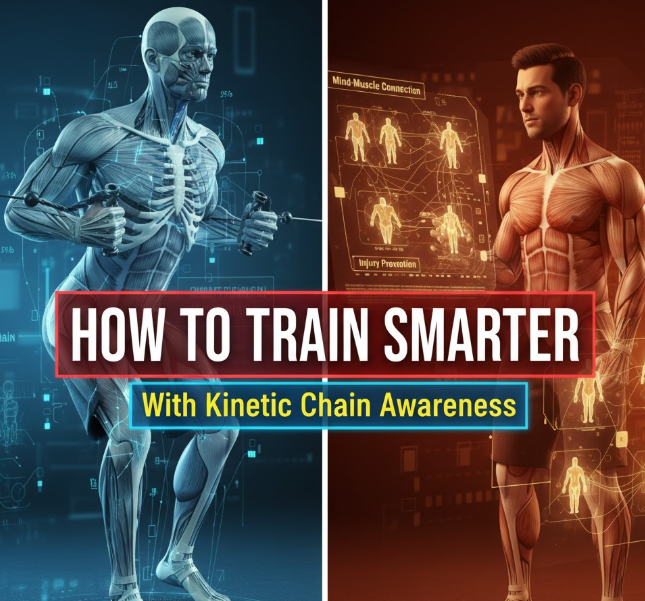
Your body doesn’t exist in isolation. When you throw a baseball, take a swing at the golf course, climb stairs or even sit in a chair, you’re not just using your arm or legs. You’re employing a network of connected muscles, joints and tissues that function as if they were links in a chain. This system is known as the kinetic chain, and understanding how to work with it will totally revolutionize your own training.
Don’t even think about what connects where when your body is at rest. They concentrate on individual muscles — biceps, abs or quads — forgetting that strength and movement arise from coordination. Athletes who “get it” how fully trained kinetic chain awareness perform differently. They become stronger, move better and don’t get injured. Whether you’re a weekend warrior or a competitive athlete, that knowledge will help kick your training up a notch.
In this article, I will help you take the first step of training smarter by getting in touch with your body’s kinetic chain. You’ll discover what it is, why it’s important and how you can use the newfound knowledge during any workout.
What Your Body’s Chain Is Actually Saying
Imagine your body as a bunch of connected segments. When you’re moving, force goes down these segments in a particular order. That is your kinetic chain at work! The word might be scientific-sounding, but the concept is simple: movement begins somewhere and then moves through your body to produce an action.
There are 2 types of kinetic chains. In a closed kinetic chain, an end point of your body (like your foot or hand) remains stationary. Think about a squat — your feet are planted on the ground and your body does the work. In an open chain, the end point is not held to that particular spot and moves freely, such as when you kick a soccer ball or throw a punch.
Your kinetic chain is comprised of bones, joints, muscles, ligaments — and even the fascia (connective tissue) that envelops everything. When one part begins to move, that movement is propagated and affects the columns both before and after it. That’s why a weak ankle can result in knee pain, or tight hips contribute to lower back issues.
The Science Behind Connected Movement
Force isn’t just going to magically develop within the body. It starts to build and then get transferred up through your kinetic chain. When you jump, for instance, the force originates not in your feet but from your feet and flows via your ankles, knees and hips up along your spine to aid the limbs as they help push you into the air. Each one of those joints contributes force to the process.
This is called a summation of force. The less resistance for force going through your chain, the more powerful and well-controlled your movements are. Athletes who truly understand this concept can produce incredible power without being overly muscular.
The opposite is also true. Force will be blocked if even one link in your chain is weak or tight. Energy dribbles away rather than being perfectly transferred. This is not only a performance buster, but you put extra workload on other parts of your body which can result in compensation patterns and injury down the road.
Why Classic Training is Often Ineffective
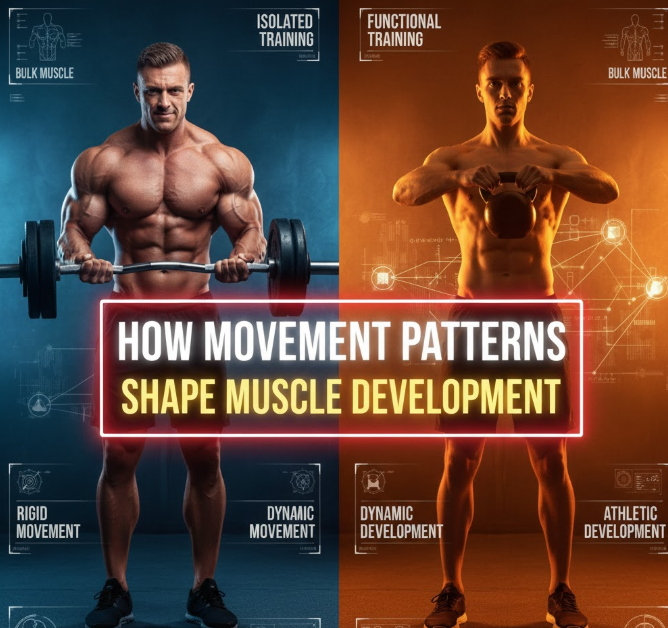
The majority of programs that you will find in the gym concentrate on training specific muscles. You bicep-curl your arms, leg-extend your quads and crunch the abs. Although these exercises build strength, they don’t train your body to move as one connected unit.
Real-life movements do not occur in a vacuum. You don’t just use your bicep to lift a child or only your quads to climb the stairs. You are using several joints and their associated muscles in sequence. You can train the muscles individually and make them bigger, but that doesn’t necessarily make you move better.
And here’s where kinetic chain awareness makes all the difference. You stop thinking “I need stronger legs” and start thinking “I need my ankles, knees, hips and core to work together better.” It’s this change of thoughts that results into entirely different exercise decisions and dramatically better outcomes.
Deconstructing Your Body’s Chains of Motion
Your body is a complex system of kinetic chains that operate with various activities. The lower half of the kinetic chain is composed of your feet, ankles, knees, hips and lower back. You need it to walk, run, jump and any lower body activity.
Your upper kinetic chain includes your hands, wrists, elbows, shoulders and upper back. This sequence, which deals with throwing, amounts to pushing, pulling and carrying. The trunk — the core — joins these two chains and is extremely important in recruiting force through the upper to lower body passageway.
For instance, when a baseball pitcher throws a fastball, the action begins in her legs. They push off the mound with their back leg, pivot their hips, leverage force through their core, generate speed with the shoulder, extend and then snap the elbow. Each of these links makes a contribution to the overall pitch speed. One weak link in this chain hampers the whole motion.
Signs That Your Kinetic Chain Could Use Some Love
How can you tell if your kinetic chain isn’t functioning properly? Your body gives you signals. Re-injury of the same area frequently points to a kinetic chain fault. If resting your knee doesn’t help, the problem could stem from your hip or ankle.
Irregular muscle development is also a hint. A very strong imbalance, in which one side is much stronger than the other, indicates that your body may be compensating for a weak link. Inefficient movement patterns, particularly during exercise/activity, often exhibit deficits in the kinetic chain. If your lower back arches too much during a squat, the issue could lie with your core or hip mobility.
Otherwise performance plateaus could be imbalances in the kinetic chain. If you’ve been training consistently but your lifts and/or athletic performance are stagnant, then it is likely that you’re getting into a battle with your own movement patterns rather than working with them.
Building Awareness Through Movement Assessment
Before you can train your kinetic chain more effectively, you need to know how it’s working now. Even basic movement assessments tell you a lot. The overhead squat evaluation is especially useful. Stand with your arms above your head and lower down into a squat.
Watch what happens. Do your knees cave inward? Do you round your torso too much forward? Are your heels rising from the floor? Each such compensation is indicative of a weak point. Knees buckling in often signifies weak glutes. Letting the centre of mass get too far in front indicates tight ankles or weak core. Heels lifting indicates an ankle mobility limitation.
You can also evaluate your upper body chain by using a basic shoulder mobility examination. Attempt to clasp one hand over your shoulder and down your back, and reach the other hand up your back from below. Actually, can your hands touch or get near? An imbalance is evident in a difference amount of two sides.
Principles for Training Your Chain
When you know what your kinetic chain is, your training philosophy changes. You begin to realize that the quality of movement is more important than how much weight you are able to move. A perfect squat with lighter weight is going to train your kinetic chain more effectively than a heavy squat with bad form.
Multi-joint exercises become your foundation. Squats, deadlifts, push-ups and rows all have you depending on more than one “link” in your chain. These compound exercises are not only great for coordination, but they also help build strength.
Progressive overload still counts, but you use it smart. You make things more difficult by increasing complexity of movement, not just weight. You may advance from a traditional squat to marching, which requires more coordination and stability through your whole kinetic chain.
Workouts That Link the Whole Body
Some drills are amazing for creating kinetic chain. The Turkish get-up is a slow, deliberate exercise in moving from lying down to standing while keeping a weight overhead. Each link in your chain has to work together so you get through it safely.
Medicine ball throws are used to teach explosive transfer of force. Whether it’s chest passes or rotational throws, you’re learning to generate power from your legs and core, rather than simply your arms. Traveling patterns, such as bear crawls and crab walks, challenge your body to move opposite limbs in sync while maintaining stability with the core.
Loaded carries are surprisingly effective. Just by walking around with heavy objects in hand — whether in a farmer’s carry, waiter walk or suitcase carry — you’re forcing your entire chain to stay upright and to transfer force from the ground with every step.
The Hip Connection: Power from the Core
In kinetic chain training your hips are something special. They bridge the gap between your upper and lower body, which is essential for transferring force. Weak or stiff hips cause problems up and down your chain.
Hip strength is all around. That’s because extension requires you to have strong glutes, abductors for lateral stability and rotators if you’re turning. Movements such as hip thrusts, lateral band walks and clamshells address these various functions.
Hip mobility is equally important. Stiff hips constrain your stride and cause subsequent links in the kinetic chain, such as the knees and ankles, to compensate. Keeping that kinetic chain open and flowing smoothly is done with daily hip mobility work such as hip circles, 90/90 stretch, and deep squat holds.
Core Training That Actually Works
Forget endless crunches. True core training for function within the kinetic chain is based around stability and force transmission. Your core’s not moving — it’s resisting movement and transferring force between your upper body and lower body.
Anti-rotation exercises such as Pallof presses train your core to not twist under force. Dead bugs and bird dogs force the core to stabilize as your limbs move. Planks and all their variations work on developing the staying power to hold yourself up for longer activities.
Rotational power exercises such as medicine ball slams and wood chops train your core to produce and manage rotation. This is important for any sport that has twisting, which is to say just about all of them.
Foot and Ankle: The Foundation For Everything Else To Stand On
Your feet are literally the entry point of your kinetic chain to the ground. Weak, or immobile feet and ankles are problems that ripple up through your entire body. But for the most part, people ignore them entirely in training.
Add ankle mobility drills to your warm-up. Ankle circles and the wall ankle mobility test (how close can you get your knee to a wall before your heel lifts?) and calf stretches all improve this crucial joint.
Foot strength matters too. Do single-leg balance exercises, toe spreading exercises, and even train barefoot every once in a while (when it’s safe) to develop the small muscles in your feet. Strong, mobile ankles serve as the base of your entire kinetic chain.
Upper Chain Shoulder Function
Your shoulders are complex joints with large ranges of motion. This mobility demands precise control, stability and strong shoulders for healthy upper body kinetic chain.
When these muscles, like the lats or chest get bigger and stronger they can artificially limit your range of motion. A lot of people have overdominant pushing muscles and weak pulling muscles, causing a muscle imbalance. For example, for every push exercise you perform, incorporate at least one pulling exercise.
Face pulls, band pull-aparts, YTW raises are all examples of workouts that build the relatively small shoulder stabilizers. Hanging from a bar is beneficial for your shoulder health and mobility. Before doing any training for upper body, always make sure you warm up your shoulders well.
Breath: The Lost Link In Your Chain
Your respiration actually has a greater impact on your kinetic chain than you may be aware of. Correct breathing maintains your core, posture and the facilitation of force transfer. Bad breathing leads to tension and loss of movement.
Practice diaphragmatic breathing — deep belly breathing versus shallow chest breathing — and focus on extending the exhale past the inhale. Lay on your back with one hand on your chest and the other on your stomach. Breathe while keeping your stomach hand the only one that moves. This activates your diaphragm properly.
When you work out, synchronize your breathing with the activity. In general, you want to exhale during the hardest part of an exercise (say, pushing up in a push-up) and inhale during the easier part (lowering down). This type of breathing is stabilizing to the core.
Sample Week of Kinetic Chain Development Training
Here is an example of a training week during kinetic chain awareness:
Monday – Lower Body Chain Focus
Warm up: Ankle mobility, Hip circles, Leg swings
- Goblet Squats: 3 sets of 8 reps
- Single-leg Romanian deadlifts: 3×6 (per leg)
- Side to side lunges: 3 sets of 8 (each leg)
- Farmers walks: 3 x 40 meters
Cool-down: Hip stretches, foam rolling
Wednesday – Upper Body Chain Focus
Warm-up: Shoulder circles, Band pull-aparts, Cat-cow stretches
- Push-ups (multiple grip): 3 x 10
- Inverted rows: 3 sets of 10
- Half-kneeling single-arm presses: 3 sets of 8 each side
- Medicine ball chest passes: 3 x 10
Cool down: Thoracic spine mobility, shoulder stretches
Friday – Full Body Integration
Warm-up: Total body dynamic stretches
- Turkish get-ups: 3 x 3 per side
- Medicine ball rotation throws: 3 x 8 each side
- Suitcase holds: 3 x 30 meters per side
- Bear crawl: 3 x 20 meters
- Dead bugs: Three sets of 10 on each side
Cool-down: Full body stretching
Common Mistakes To Avoid
A big mistake is working through the movements too quickly. When training for the kinetic chain it is about control and awareness. You miss the ability to perceive how force moves through the body if you’re too fast. Take it slow, especially when you are getting used to new moves.
Sleeping on mobility work is another mistake. It’s like getting really strong and losing all flexibility: The same thing happens with mobility loss, only you lose a lot of movement. Spend a minimum of 10 minutes before each workout on mobility drills that focus on the areas you are aware are tight.
Some people try to fix everything at the same time. If you discover that there are several limiting factors then choose the one most constraining. Typically, it’s ankle or hip mobility, or core stability. Repair your leakiest chain first, then worry about the smaller issues.
Tailoring to Individual Sports
Kinetic chain training will fit into any sports or fitness goal. Runners should prioritize single-leg stability and hip strength to enhance efficiency and minimize injury. Cyclists also need to work on hip mobility and rotational core moves in order to counteract that repetitive forward movement.
Athletes throwing from overhand — baseball players, tennis players and volleyball players among them — require great shoulder health and rotational power. Their workout should contain a good amount of shoulder stability work and medicine ball throws.
Even if you’re not an athlete, kinetic chain awareness enhances daily living. Coordinated full-body movement is also necessary for tasks like picking up children, hauling groceries or gardening. This makes these things much simpler and significantly more safe.
Injury Prevention Through Chain Awareness
Many injuries occur as a result of dysfunctional kinetic chains. Runner’s knee isn’t really a problem with your knees at all — it’s caused by weak hips that let your knee collapse inward and twist during running. The knee is just the body part left holding the bag for an issue somewhere else in the chain.
Back pain often leads back to tight hips or weak core muscles. The lower back overworks to make up for these weak links, and voila — you end up with pain. Fixing the root cause — not just the symptom — eliminates it for good.
That said, when you train your entire kinetic chain, it spreads the stress throughout multiple joints and muscles. There’s no one spot that gets overloaded, which reduces the risk getting injured a lot. This becomes even more important as an individual ages or in the presence of increased exercise intensity.
Chain Awareness Tools and Technology
You don’t need anything fancy to develop your awareness of the kinetic chain, but there are some tools that can certainly assist in this process. Resistance bands are cheap and great for mobility work and stability exercises. Medicine balls also allow for powerful, full-body moves that focus on force transfer training.
Videoing yourself works really well for feedback on exercises. Check yourself out from different points of view. You will see compensations and asymmetries that you can’t feel in the moment.
Balance tools like wobble boards or BOSU balls may have a place in kinetic chain training, but they’re not necessary. Most people use them wrong, making exercises more about balance than movement — and that does nothing for real life. Use them sparingly and purposefully.
Periodization for Long-Term Chain Development
You can’t pay attention to everything all at once. Periodize your training to focus on kinetic chain function at the right time. Take 4-6 weeks doing mobility and stability, concentrating on establishing a strong foundation.
The next phase could focus on strength in basic movement patterns — squats, hinges, pushes, pulls. Another phase would add power and speed, training your chain to function explosively.
Throughout, retain the qualities you have developed. So you’ve always got to include some mobility work, some stability exercises and some strength training, even when focusing on something else.
Measuring Your Progress
Movement reassessments measured regularly will determine your objective improvement. Can you squat deeper? Are your knees still aligned? Has the disparity between sides lessened?
Performance improvement while participating in your sport or activities confirms your kinetic chain is functioning as brilliantly as it should. Achieving faster race times or a more explosive vertical jump verifies that the force your body creates is better transferred to the ground.
Pain reduction is the most crucial factor in kinetic chain progress. Chronic aches and little nags are coming to mind less and less; your body is working better. You’re not fighting against yourself anymore.
For more information on biomechanics and movement science, visit the National Strength and Conditioning Association.
What is the kinetic chain?
The kinetic chain is the interlinked system of bones, joints, muscles and soft tissues in your body that move together to produce movement. As you move, force flows through this chain of body parts, transferring from one part to another. Think of it as dominoes falling — one part impacts the next part.
When can I expect to see results in the functioning of my kinetic chain?
On average, people can see differences in the quality of their movement within 2-4 weeks if they are intentionally and specifically training for it. Noticeable strength increases and performance enhancements are usually found after 6-8 weeks. Permanent alteration of movement patterns takes approximately 3-6 months of daily training.
Will kinetic chain training help my chronic pain?
Yes, most chronic pain problems are a result of kinetic chain dysfunction. When one link in the chain isn’t performing adequately, other links are forced to make up for it and eventually become painful. When you treat the weak or tight link in your chain (often starting at the root cause), you frequently make pain disappear that didn’t budge with other treatments.
Do I have to buy a lot of equipment for kinetic chain training?
No. Tools like resistance bands and medicine balls are great, but you can also train your kinetic chain with bodyweight exercises. Squats, lunges, push-ups, planks and crawling patterns are all great tools for building kinetic chain awareness without any equipment.
Is kinetic chain training just for athletes?
Not at all. All people can and should benefit from improved movement quality. All forms of daily activities such as lifting bags of food, climbing stairs or playing with kids incorporate coordinated kinetic chain function. Training your chain makes life easier, and you are at a lower risk of injury.
What sets kinetic chain training apart from functional fitness?
They’re closely related concepts. Functional fitness is simply working on movements you already do everyday in your home, or of course, in other places if you’re out and about. Kinetic chain training focuses on the way different parts of your body link together and transfer force during these motions. You might say that kinetic chain awareness enables effective functional training.
Do I need to stop doing isolation exercises all together?
No. Isolation exercises are still useful, particularly when addressing specific weaknesses or even just working on lagging areas in general to maximize muscle growth. But a large chunk of your training needs to zero in on multi-joint moves that will train your kinetic chain. Treat isolation work as a complement, not your main training.
Does good posture suffer when the kinetic chain fails?
Absolutely. Your posture is determined simply by how all the links in your chain are arranged. Weak zones or tight spots lead to compensations that can change your posture. It’s been my experience that if the kinetic chain functions efficiently, good posture is a natural state of being.
Bringing It All Together
Training with kinetic chain awareness changes the way you think about exercising and moving. You stop thinking in terms of individual muscles and start seeing your body as a whole system. Each part influences every other. When you train this system as a unit, everything gets better — strength, power and endurance, flexibility and resistance to injury.
The transformation is not a matter of complex programs or costly equipment. You need to pay attention to what you’re doing physically. It involves large exercises that recruit the activity of multiple joints in concert. It’s shorthand for tackling mobility restrictions before they become issues somewhere else down the line. It means getting up and walking with intention and control.
You can start today by becoming more mindful. Next time you work out, think about how force moves through your body. Notice your feet on the ground as you sit in a squat. Feel your core activate when you press a weight over your head. Feel the relationship of how your hips rotate and arms speed up when you throw.
Knowing this is the first step to training smarter. From that point on you will gradually apply what is covered in this article. Address your biggest limitations. Establish mobility and stability. Build your chain through compound exercises. Allow your body time to adjust and get better.
There has always been your kinetic chain, functioning each time you moved. You know now how to intentionally train it. The result is a body that moves better, works harder and performs more powerfully than ever before — and stays that way. This isn’t just smarter training — it’s training that, quite simply, makes sense for how your body works.