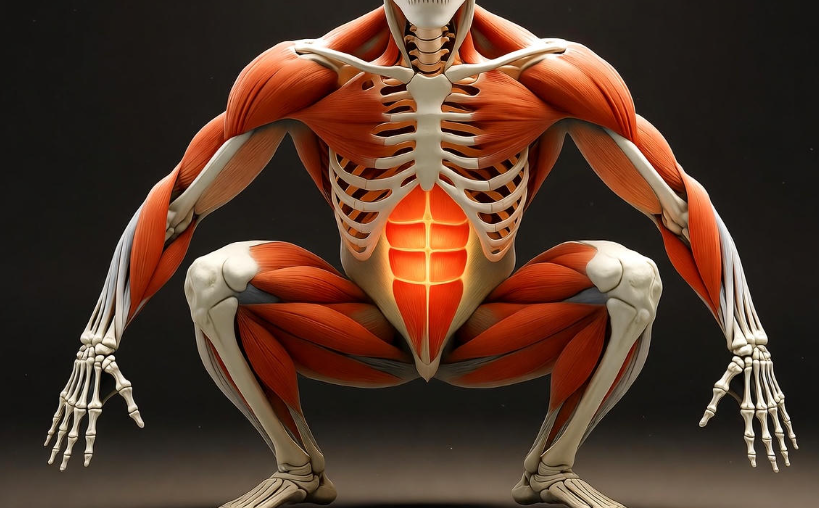
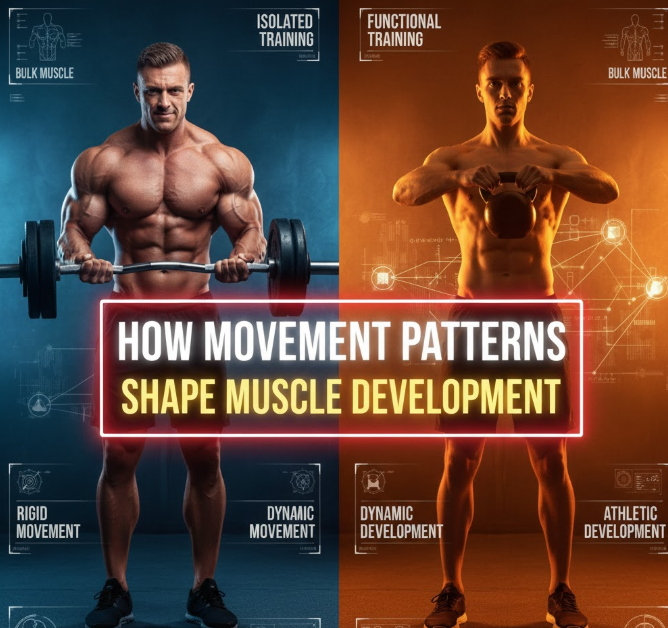

Your muscles don’t expand by lifting heavy weights willy-nilly. The way in which you move your body — the specific patterns and directions that you practice — strictly determines which muscles become stronger, larger, and more capable. Picture your body as though it’s clay that molds itself to whatever you do most often. One body develops one set of musculature, not just for genetics alone, but because the movement patterns are entirely different.
This relationship between how you move and how your muscles will be used is more critical than most people realize. Whether you’re looking to get stronger, perform better as an athlete or simply maintain your health, knowing how this relationship works can make a world of difference. The human body is wicked smart — it specializes right down to the task, making precisely what you are using most often.
Why Your Moves Matter (More Than You Think)
Each time you move, you are telling your body what it needs to get good at. These signals dictate where muscle grows, how it is organized and what it can do. Are some dance moves easier to master (adequately) than others? I think so, but none of them feels easy at first: Even the simplest move can be frustrating to get good at. When you repeat a pattern of movement often enough, your nervous system becomes more skilled at controlling it and your muscles adapt. This adaptation will eventually make you better able to perform that movement or even a similar one with ease — that is, until you consciously mess up the success.
Take someone who simply benches versus someone who does pushups, dips, and various chest exercises. Both will develop chest muscles, but the one with varying movement patterns becomes stronger across a more complete range. Their muscles learn to work in multiple angles and positions which builds functional strength that can be used for everyday life activities.
People just are sitting all day doing the same movements over and over again without variation. This develops strong muscles in a very confined range, and weakness in other directions. It would be like only training your body to go up and down, rather than side-to-side or by rotating — you would be imbalanced and probably injured.
The Anatomy of Movement and Muscle Development
Your muscles grow through hypertrophy, a term for when muscle fibers are being shifted and then infused with strengthening agents. But here’s the important point: muscles don’t get larger uniformly everywhere. They grow in response to the lines of force you produce while moving.
When you do a squat, for example, you’re loading the legs in vertical compression. This induces specific adaptations in your quadriceps, glutes and hamstrings that make them better handling vertical loads. But the same muscles might not be as ready for lateral movements like side lunges because that is a different movement pattern with different patterns of muscle fiber recruitment.
Here too, your nervous system has a lot to do with it. Before a muscle can grow effectively, your brain has to learn how to switch it on most efficiently for certain moves. That’s why beginners often get stronger before they start to gain much visible muscle, because their nervous system is learning the movement pattern first. With that neural pathway in place, muscle development quickens.
This is where the idea of “motor units” provides strong explanation. The nerve and all the muscle fibers it controls is a motor unit. Various types of movement pattern recruit varying combinations of motor units. Heavy, slow movements trigger high threshold motor units, those containing the largest muscle fibers and, although explosive movement pattern stimulation differ from fast-twitch fibers. Different movement patterns mean you’re getting a well-rounded development of all types of muscle fibers.
Movement Planes and Muscle Activation
The human body operates in three main planes, and you do have to emphasize various muscles with each one. Knowing these planes can also help you program for more balanced, functional muscle and strength development.
Sagittal Plane: Your body divides in two — left and right — through the sagittal plane. These movements involve moving forward and backward or up and down: squats, lunges, bicep curls, running. This plane is where most gym activities occur, which is why so many people become overdeveloped in these patterns of movement at the expense of others.
Frontal Plane: The frontal plane separates your body into front and back sections. Side-to-side action takes place here: lateral lunges, side shuffles, standing lateral raises and side planks. Athletes who require rapid changes of direction — such as basketball or soccer players — will already develop strong frontal plane muscles through sport specific movement.
Transverse Plane: The plane of the transverse divides your body into upper and lower portions. Rotational movement happens here: twisting, swinging or throwing movements, and anything that involves a Russian twist or wood chop. This plane is perhaps the most overlooked in a regular workout but it’s important for everyday activities, such as turning to see what’s behind you while driving last minute or swinging a golf club.
Movements That Develop Certain Areas of Musculature
Each basic movement pattern will hit different muscles and produce different adaptations. Let’s dissect the big patterns, and what they are growing:
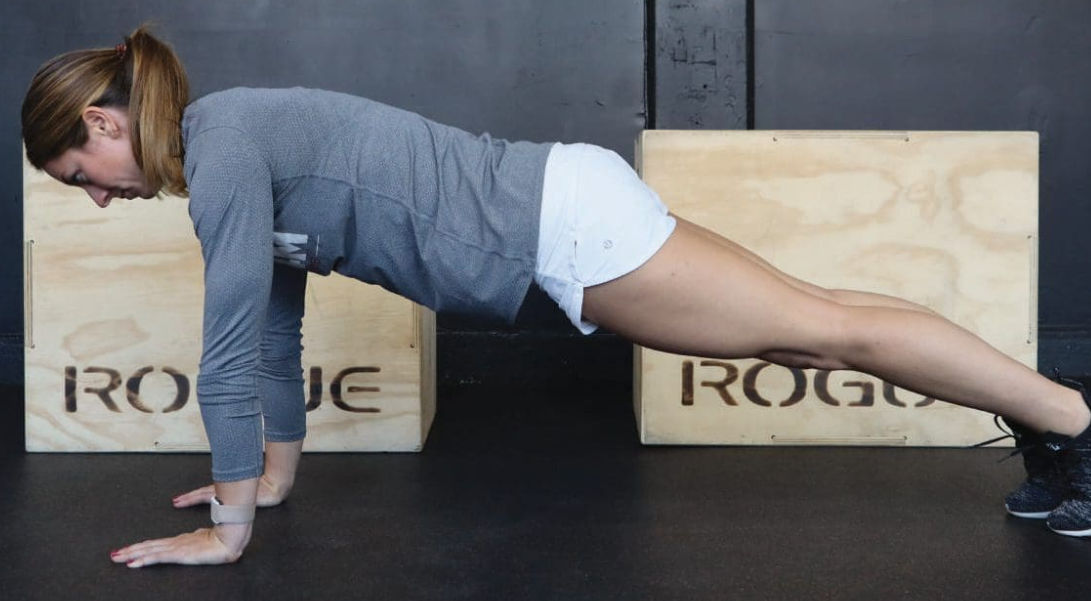
Pushing Movements: Pushing movements place weight farther from your body. Horizontal pushes, such as bench presses and push-ups, strengthen your chest, front shoulders and triceps. Vertical pushes, such as overhead presses, work your shoulders and upper chest in a different way. Your body learns how to push in as well by generating force, learning also how control and stabilize these motions.
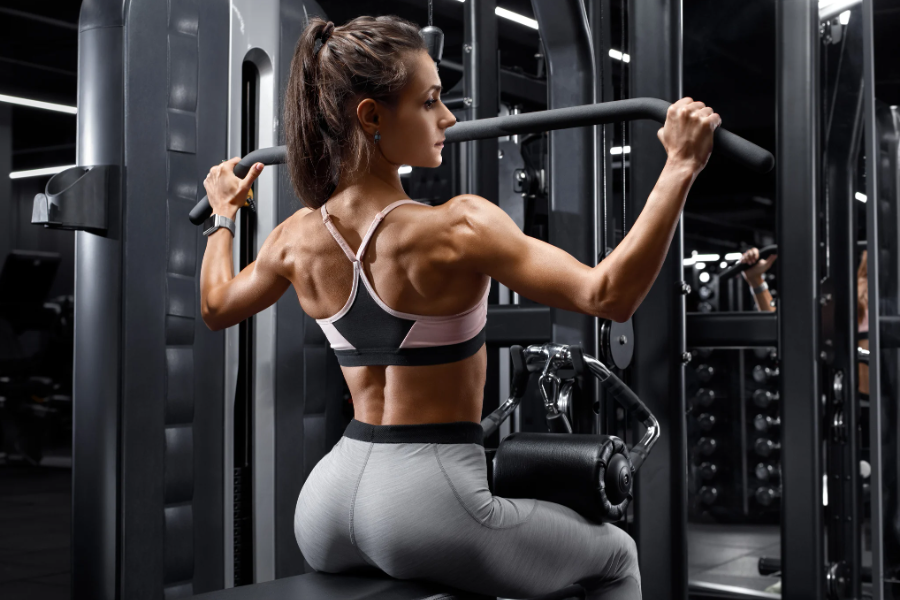
Pulling Actions: Pulling actions bring weight toward yourself. Vertical pulls such as pull-ups and lat pulldowns are developing your back width and biceps, but with high focus on your downward pulling strength. Rows, or horizontal pulls, build back thickness and rear shoulder strength. These patterns help to develop muscles that counteract pushing motions and maintain good posture.
Squatting Pattern: The squatting pattern is that of the hips descending with the torso remaining fairly upright. This basic move builds your quadriceps and glutes, as well as your core stabilizers. Narrow-stance squats, wide-stance squats or single-leg squats work ever-so-slightly different muscle fibers in these muscle groups, proving just how nuanced movement adaptations can be.
Hinging Movements: Hinging movements involve bending at the hips without rounding your back, as in deadlifts or kettlebell swings. These are workhorses for building your posterior chain — that’s your hamstrings, glutes, and lower back. They can teach your body to produce force with hip extension, which is essential for jumping (and subsequently the landings), running and lifting things safely.
Holding and Loaded Carries: Holding and loaded carries are positions you move into and walk with weight. Farmer’s walks, suitcase carries and overhead carries challenge our ability to maintain significant core stability, grip strength and total-body coordination. These are the types of patterns we’re creating — functional muscle that serves in activities such as carrying groceries or moving furniture.
Why Athletes in Different Sports Look So Different
The way that the body responds to certain movements is likely why athletes in different sports all look so specific. A gymnast’s body doesn’t resemble a marathon runner’s, who looks nothing like a football player—that little bit of space was created by their respective movement patterns.
Gymnastics: Gymnasts do all kinds of pulling and pushing movements, and static holds with their bodyweight thousands of times. This develops a dense, tight musculature with superlative relative strength. Their training is grounded in controlled movements through full ranges of motion, so they can build muscle that’s strong but flexible.
Track Sprinters: Track sprinters are powerful, ballistic movers with massive leg extensions and dynamic arm syncs. This creates huge leg muscles, particularly our glutes and hamstrings, as well as beautifully defined upper body musculature from the powerful arm drive. Their movement seems all about that output of maximum power in straight-line acceleration.
Swimming: Swimmers travel through resistance of water using consistent pulling and kicking motions. From the repeated pulling pattern, their shoulder muscles, lats and core develop greatly — combined with the fact swimming isn’t a weight bearing sport and being hydrodynamic in water is such an advantage – you don’t need the muscle mass like you do compared to on land sporting bodies. Resistance in water means long, lean muscle development.
Rock Climbing: Rock climbing is heavy on pulling and stabilizing movements which are mostly focused on grip strength, forearms and back. You do get this vise-grip, and your forearms and lats will be massively developed because you’re holding on to things for long periods of time, pulling up against body weight at strange angles.
The Reps and Sets in Muscle Sculpting
Muscles become attuned to the specific repetition ranges and speed with which you train them. This means that the speed and rate at which you move has significant effects on muscle development.
Low Rep Heavy Weight (1-5 reps): Low rep heavy weight with slow movement trains your nervous system to fire off maximum muscle fibers together. This promotes strength and dense muscle growth but is focused more on neural adaptations than sheer size. Powerlifters who build around this pattern forge amazing strength, not all of them are large.
Moderate Reps (6-12 reps): Moderate reps with controlled tempos provide the classical “hypertrophy-increasing” stimulus. This is long enough to prompt significant hypertrophy from the adequate tension time and metabolic stress it provides during a set. This is why bodybuilders tend to work within these ranges: In their experience, this balances mechanical tension with volume for the greatest gains.
High Reps (15+ repetitions): Lighter weights for high reps for muscular endurance and metabolic stress to induce that “pump” and cellular changes. Endurance athletes naturally practice such programming via their sport, resulting in muscles that are fatigue-resistant but not necessarily max-strength or size.
Forceful actions recruit fast-twitch muscle fibers differently than do slow, controlled movements. Athletes who train explosive patterns — such as jumping, throwing or sprinting — cultivate muscles specialized in the rapid production of force. Your muscle fibers literally adapt, at the cellular level, to be able to contract faster.
Creating Balance Through Movement Variety
One of the greatest mistakes individuals do is to copy/paste their movement patterns constantly, with no variations. This creates muscle imbalances which not only hinder performance but also raise the risk of injury.
Your body was made to move in many different ways. If you only train some patterns, the opposing muscles get weaker, your joints have less stability in untrained ranges and your body develops movement compensations. A push-only athlete might end up with rounded shoulders, as their chest ends up overpowering their back. Whether that person runs only forward, and therefore has weak stabilizers to the side, subjecting him or her to possible ankle- or knee-wrenching injuries when reaching for a pass or even backpedaling.
Balanced development comes from deliberately incorporating opposing movement patterns. For every push, include pulls. Down the road for every step forward, build in some sides or rotation. Work some mobility into those same patterns for every strength movement.
It doesn’t mean every workout has to achieve perfect balance, but your overall training week should encompass varied movement patterns that hit all major muscle groups through various other planes of motion. Consider the movements human beings evolved to do: walking, running, climbing, throwing, carrying, pushing, pulling, twisting and jumping. Our bodies expect this variety.
Life Stage Movement Patterns
The types of movement you engage in should change as you grow older and your goals. What’s effective for building muscle at age 20 won’t necessarily be optimal at 60 — not because aging bodies can’t build muscle, but because joint health and the quality of your movement become increasingly paramount.
Youth: Young people tend to have articular resilience which allows for more aggressive movement patterns and potential higher volumes of training. It is a period in which varied movement exploration establishes the groundwork for motor patterns that endure throughout the life span. Youth athletes who play multiple sports develop well-rounded athleticism more than those who specialize too early.
Mid-Life: From a mid-life point of view quality of pattern of movement is more important than quantity. The focus becomes less about building muscle and more about preserving joint integrity and the ability to move functionally. Controlled movements in full ranges, focus on stabilization and inclusion of low-impact patterns such as swimming or cycling can ensure ongoing development without excessive joint load.
Older Adults: As we get older, it’s even more important to keep a wide range of movement patterns in our routines, and to include movements that test your balance. Resistance training still plays a role when it comes to building muscle, but use of movement in patterns that are safe, functional and make sense becomes more important. “Squat to sit,” “push up out of chair,” reach overhead — exercises that mimic everyday activities help preserve the muscle mass necessary for independence.
Applying Movement Pattern Information
Nothing I just explained matters if you can’t put them to use in your own training. Here is how to make movement pattern awareness work for you with muscle-building:
Get a sense of your current movement diet, first. What are the patterns that you repeat most often? Where do you go? Practically everyone finds that they strongly prefer certain patterns, and ignore others altogether. Record your common weekly activities and exercises, then categorize them based on movement pattern and plane of motion.
Next, identify the gaps. Which fundamental patterns are missing? Are you performing a lot of sagittal plane movement and not enough frontal or transverse plane exercises? Do you pull more than you push? You are hitting the legs but ignoring rotation core strength?
Then, gradually add missing patterns. Don’t tear it all down at once, or you’ll be sore and will quit. Include one or two new movement patterns a week. If you’ve just been doing forward lunges, start incorporating lateral lunges. If you’re a bench press-only person start adding rows. If everything you are doing is slow and controlled, add some explosive moves like jumps or throws.
Notice how your body reacts. New movement patterns can also feel strange at first, as your nervous system hasn’t created the motor trajectories yet. This is a good kind of awkwardness — it means you’re forging new adaptations. Allow new patterns to become part of your rhythm for a few weeks before you determine whether they are “working” or not.
Pitfalls That Can Hold Back Your Muscle Growth
Even with the best of intentions, many people are using movement patterns in their workouts that shortchange muscle development:
Mistake 1: Living in one plane of motion. If 90% of your exercises only go forward-backward, you’re severely shortchanging tremendous potential for nearly unfettered growth! Your body also has muscles for side-to-side, and rotary movements but those muscles are underdeveloped causing muscle imbalances and believe me when I say that you will NOT grab heavy weight or you will have a swayed back.
Mistake 2: Focusing on muscles, not movements. Believing “I need to work biceps today” instead of “I need practice pulling patterns,” will lead to isolated exercises that have no transfer to functional tasks. Muscles don’t function in isolation; they work as systems, smoothly integrated to accomplish movement.
Mistake 3: Always moving for the same duration. If you’re only ever lifting slow and controlled, then you’ll never develop explosive power. If you’re doing everything fast, ballistic, you miss the advantages of time under tension. Your muscles need different speeds to grow fully.
Mistake 4: Shying away from awkward messages or movements. That clumsiness is telling you there’s a weak movement pattern — exactly what you need to be working on. People tend to stick with exercises they are good at, reinforcing existing patterns and leaving gaps.
Mistake 5: Following another person’s pattern of movement. What a strong Olympic weightlifter or professional bodybuilder does might not work for your body, your goals, or your current level of ability. The way you move should be specific for to your needs and restrictions.
Building a Complete Movement Practice
Building muscle in all three planes of motion doesn’t have to be confusing. Here’s a simple model that anyone can use:
Deploy a pattern of each one of the fundamental movements once a week: push (horizontal and vertical), pull (horizontal and vertical), squat, hinge and carry. It makes sure you’re working all the big muscles in functional movement patterns.
Work in each all three planes of motion during the course of a week. Your training is probably going to be heavy on sagittal plane work, but at least a couple sets of some lateral and rotational stuff. This can be as straightforward as incorporating side lunges and wood chops into your leg day.
Change your repetition ranges and the speed of movement every few weeks. Focus on lifting heavy with lower rep counts for a month (after you’ve spent a month working on your strength), then add reps to the same exercises, and finish with some explosion exercises like pullups, squats, or push presses. That keeps muscle fibers growing to their full potential.
Practice movement quality over quantity. Doing 10 perfect reps through a full range of motion is far better for muscle development than doing 20 sloppy reps through partial resistance. Try to concentrate in controlling the movement throughout the whole range of motion with you feeling it all in the target muscles.
The Relationship Between Daily Movements and Muscle Form
It’s not just your workouts that shape up your muscles — it’s everything you do all day long. If you spend eight hours hunched over at a desk, those sustained patterns of movement and posture become what your muscles are adapted to do, no matter how many deadlifts or Pilates classes they have crossed paths with in the gym.
Those who tend to sit a lot may experience tight hip flexors and weak glutes, as the act of sitting involves being in continual hip flexion. Their bodies begin to adapt to this position and it causes hip extension type movements (for example the hinge pattern) feel extremely difficult and for them they may even struggle to develop your glutes when training.
Factory workers who lift and carry on a daily basis develop functional strength in the pattern they actually have to work, while leaving other patterns undeveloped that they never use. A construction worker might have amazing pulling and strength in carrying, but lack power for pushing or rotation.
The answer is movement consciousness all throughout your day, and not just at the gym. Take intervals in moving in the opposite patterns to where you normally sit/stand. And if you sit all the time, stand up and do some hip extension stretches. If you’re always reaching forward, work on pulling. No, these mini-sessions don’t make massive muscles but they do maintain balanced movement patterns that can help you more fully adapt to your workout.
Tracking Your Movement Pattern Progress
Tracking movement pattern progress differs from tracking strength progression. Instead of logging only the weight lifted, log:
Quality of movement: Can you do the pattern with more control and better technique than last month? Record yourself here and there to observe changes in form.
Range of motion: Are you passing through fuller ranges as your body learns the pattern? If normal function become more mobile within a movement, it is healthy.
Confidence with movement: Are movements that used to feel awkward now more comfortable? Movements should start to feel smoother and more coordinated as your nervous system gets accustomed.
Transfer pattern: Does the movement you practice translate into new ways of moving? Pick up something off the floor; if you practiced having a good squat pattern in the gym, it should feel as if lifting that item was easier to do.
Balance of patterns: You are keeping some sort of stability between cross trends? If your push strength is outpacing pull, you’re creating an imbalance.
Frequently Asked Questions
How long does it take new movement patterns to drive muscle development?
Your nervous system learns new movement patterns within 2 – 4 weeks, this is why you feel more coordinated after practicing. Visible muscle differences often occur after 6-8 weeks of steady exercise. Full adaptation to a new movement pattern will take 3-6 months given training volume and intensity.
Can I build muscle by doing the same exercises over and over again?
Yes, but you will become weak in isolated ways as part of a fractional muscle development. When those lines are tight, repeating the same patterns over and over works the same muscle fibers the same way throughout those repetitive movements, causing adaptation along that particular pathway. Pattern variety is crucial for balanced, functional muscle growth.
How few distinct movement patterns are required?
At the very least, train the six basic patterns once a week – horizontal push, horizontal pull, vertical push, vertical pull, squat and hinge. With the addition of carrying, rotation, and lateral movements you achieve a more comprehensive development. Most average folks do well with around 8-12 movements or exercises in rotation.
But should people who are only aiming to stay healthy care about movement patterns?
Absolutely. Removing any restrictions from functional movement patterns within the muscles will reduce risk of injury, keep a person mobile and make daily activities more comfortable. Older adults, especially, gain because diverse patterns preserve the instinctive muscle coordination required for balance and preventing falls.
Do I do one movement pattern on this day and another on that day, or do I mix them?
Either approach works. Some people like spending days focusing on specific patterns (push day, pull day, leg day), while others alternate patterns each workout. What matters is variety over the course of a week, not order day to day. Opt for the one that suits your schedule and desire.
How can I tell if my movements are well balanced?
Test opposite movements: If you can do 10 push-ups, you should be able to do about 10 rows lying down horizontal. If you can squat 150 pounds, your hinge pattern (think Romanian deadlifts) should be equal to or greater. Big disparities are imbalances we should be concerned about.
Conclusion: Your Muscles Hear Movement as the Message
Your muscles are forever listening to the messages of movement that you convey. Each pattern you repeat, each direction in which you move, every speed at which your practice tells your body what to be good at. This amazing adapting system means you actually have a lot of control over how your muscles get stronger—if you are using varied, intelligent movements.
Those with the most functional, capable bodies are not always the ones who work out the most. They’re the ones who move in many different ways, putting their muscles through diverse patterns that create total development. They work by pushing, pulling, squatting, hinging (bending at the waist), carrying and rotating; also moving laterally. They practice movements of different speeds and distances.
Muscle-building is about more than lifting heavy weights or doing dozens of reps. It’s not about learning to move in a very limited number of ways, but rather teaching your body how to move well in many directions, planes and patterns. When you embrace a variety of movement, your muscles grow in a way that both looks good and can be put to use in the real world. And that is what separates muscles built for show from muscles built for life — and movement patterns dictate which you build.