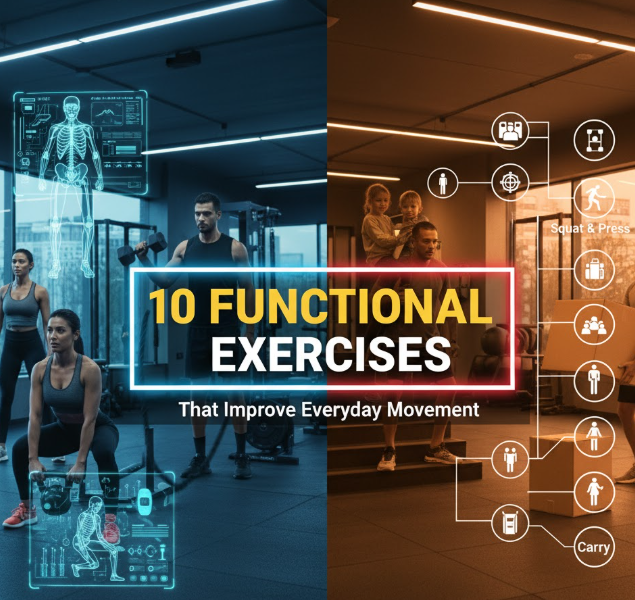

Every time you reach for something on a high shelf or pick up groceries, you are moving your body in complex ways that require strength and coordination. These everyday tasks are simple, but they require more from your body than you may realize. That’s where functional exercises come in — movements that are designed to make your everyday life easier, safer and more efficient.
Unlike gym exercises that isolate each muscle, functional exercises use many at the same time — just like they do in real life. If you are a busy parent, an office worker or someone who wants to stay active as they age, these four exercises can change how you move throughout your day. You will notice that you feel more comfortable lifting heavy things with ease, have better posture to sit at your desk all day without discomfort and feel like moving after a long day of work.
And in this detailed guide, we’ll discuss 10 potent functional exercises that will immediately carry over to better everyday movement. Every exercise is selected for its utility in daily activity, and we’re going to demonstrate exactly the right way to do them. Let’s take a look at how these simple, effective moves can seriously impact your day-to-day.
The Importance of Functional Training Workouts And Why They’re More Effective Than You Think
Classic weightlifting can be all about getting buff for aesthetics, but functional training has different intentions: It’s about making you stronger, as you go through life. Training functionally will train your body for the movements it actually needs to be able to do. The next time you twisted to pull an item out from the back seat of your car, or bent over for a quick shoe tie (while standing!), did you notice how good that movement felt? These activities require the use of several muscles groups working in unison as well as your balance and flexibility.
Functional exercises help prevent injury during other activities. When your body knows how to move well against resistance, you’re less likely to wrench your back while moving furniture or twist an ankle walking on uneven ground. The exercises can help improve your posture as well, and that is important because most people sit at desks or stare down at phones for hours on end. Less back pain, fewer headaches, more energy throughout the day: It’s all related to improved posture.
The Squat: The Basis of Your Sit and Stand
The squat imitates one of the most frequent actions you perform every day: sitting down and standing up. Getting out of a chair, going to the bathroom, or even picking something up from the floor are all just variations on the squat. Developing this pattern makes those activities easy and takes the burden off your knees and lower back.
To do a correct bodyweight squat, stand with your feet just outside of shoulder-width apart, toes slightly turned out. Drive your chest up and engage your core as you push your hips back, as if you’re going to sit in an imaginary chair. Squat until thighs are parallel to floor, or as low as comfortable. Knees should travel over your toes, without collapsing inward. Push through your heels to stand back up.
The thing with squats is they are easily adaptable. Begin with bodyweight squats until you perfect the form, then move on to goblet squats with a weight held at your chest, or wrap resistance bands around your legs for even more of a challenge. Shoot for three sets of 10 to 15 reps, three times a week. You’ll also find that as you become stronger, getting up from low chairs will also be easier and playing with your children or grandchildren on the floor won’t leave you weak in the knees.
Deadlifts: How to Perform the Exercise Safely
Whenever you reach down to grab a laundry basket, hoist up a suitcase, or lift groceries off of the floor, you’re deadlifting. It’s a pity because most people do the complete opposite and use their back instead of legs and become injured. The deadlift trains your body to move in a proper hip hinge pattern, which saves your spine when picking up heavy things.
Stand with your feet hip-width apart, in front of a weight (dumbbells, kettlebell, heavy bag). Hinge at your hips, not your waist, to push back with your bottom while keeping your back straight. Your knees will bend slightly, but the action is largely made at your hips. Grip the weight, tighten your core and rise by pushing through your heels to stand up straight while bringing the weight along. Your hips and shoulders should rise at the same time.
The deadlift is working your entire posterior chain — the hamstrings, the glutes and all those back muscles. This makes you stronger for things like gardening, lifting piles, and rearranging furniture. Start light if you need to, and focus on perfect form rather than heavy weight. 8-12 reps for 2-3 sets twice a week will create a functional strength. The next time you have to lift something too heavy, you’ll feel the difference in your body — it will automatically get into position and the lift will seem perfectly natural and safe.
Lunges: Balance and Single-Leg Strength
Whether walking up stairs, stepping over hurdles or even getting into and out of cars, one-leg strength and balance are needed. Lunges can help teach your body these specific patterns of movement all while developing stability in your ankles, knees and hips. This exercise is very important for reducing fall risks, specially during aging.
Start with feet together, then step forward with right foot, planting sole down. Lower your body until both of your knees form 90-degree angles. Your back knee should float just off the ground while your front knee remains directly over your ankle. Press through the front heel to return to start, and repeat on the other side.
You can also do lunges in place (stepping forward and back to start) or as walking lunges, moving forward with each step. For an extra-strong challenge, do reverse lunges — stepping backward instead of forward — which are easier on the knees and even better for balance. Begin with three sets of 10 lunges for each leg, two or three times a week. As you gain strength, you will notice the stairs become easier to climb, stability on uneven surfaces becomes easier and confidence in activities requiring single-leg strength increases.
Push-Ups: Upper Body Strength For Every Day Activities
Pushing movements are a part of everyday life. Opening heavy doors, pushing a shopping cart and getting up from the floor — even pushing yourself out of bed — all depend on pushing strength. Push-ups help to build the practical strength in your upper body, while using your core to stabilize.
Begin in plank with hands positioned a bit wider than your shoulders, arms straight and body in line from head to heels. Lower your body down, using your elbows to support you and the same 45-degree angle as when at the top position. Lower yourself all the way down to where your chest is just about to touch the ground, and then push yourself back up. Be sure to engage your core during the move to protect your lower back.
If regular push-ups are too difficult, begin with incline push-ups on a bench, table or against a wall. The higher the surface, the easier this move becomes. As you get stronger, gradually lower the height until you can do push-ups on the floor. Try to get three sets of as many repetitions as you can with great form, three times a week. Strong pushing muscles allow you to perform physical duties effortlessly, enable you to stand better and you’ll be strong enough to catch yourself if a loss of balance occurs.
Rows: For Better Posture and Back Strength
As great as pushing exercises can be, pulling exercises are just as important for complete strength and posture. Rows work the muscles of your upper back and shoulders to pull back, which is needed for things like standing up straight, opening doors or a refrigerator door, starting a lawnmower or lifting something toward your body.
For a body-weight row, you would use a sturdy table or bar at waist level. Lie under it, clutch the edge with both hands and extend your body at an angle, your heels planted on the floor. Pull your chest up to the table or bar, squeezing your shoulder blades together at the top. Return it with control back down.
The bent-over row can also be done if you have resistance bands or dumbbells available. Hinge at your hips (with a slight knee bend), make sure that your back is straight. Pull the weights up to your ribcage leading with your elbows and squeezing your shoulder blades together. Perform 3 sets of 10-15 reps, two to three times per week. Strong back muscles combat the forward-shoulder position of sitting and spotty phone use, which in turn means less neck and shoulder discomfort while working on your overall posture.
Planks: Strengthen Your Core for Everything You Do
Your core isn’t only about those eye-popping abs you’ve worked so hard for (if visible abs are even what you’re going for), it’s the powerhouse center of your body that provides stability, support and control in almost everything you do. A strong core keeps your spine protected, balances improved and every other exercise (and daily activity) easier. One of the best exercises for developing this critical stability is the plank.
Begin in forearm plank position, with elbows directly beneath shoulders, forearms on the ground and body a straight line from head to heels. Tighten your core by drawing your belly button toward your spine, squeeze your glutes and maintain a straight line from head to heels. Do not allow your hips to sag or pike upward. Breathe naturally as you maintain this position.
Start with 20-30 second holds, slowly working your way up as you become stronger. Do three to four holds, supplementing with short rests in between them, just three to four sessions a week. Moves like side planks (balancing on one forearm with your body sideways) train this lateral stability, which can benefit movements such as reaching across your body or carrying something on one side.
Step-Ups: Real-World Stair Climbing Power
For many people, stairs can prove difficult, especially as you grow older or if you’re out of shape. Step-ups train the pattern and strength of climbing a stair, hiking or stepping onto a curb. This move works your leg strength, power and balance at the same time.
Locate a heavy box, bench or other solid step that is about knee high. Position your right foot fully on the step and press through your right heel to raise your body up, bringing your left foot next to it on top of the step. Step backward with control, starting with the same foot. Do all reps on one side before switching.
The trick is to work with the leg on the step, rather than relying on your lower leg to push off. It trains each leg individually, correcting strength disparities. When you’re starting out, choose a lower step and increase its height as your strength improves. Do three sets of 10-12 reps per leg, two to three times a week. You’ll find that going up stairs isn’t such a terrible thing, and if you live in an area with hills or you end up at a stadium event climbing bleachers, you won’t be sucking wind.
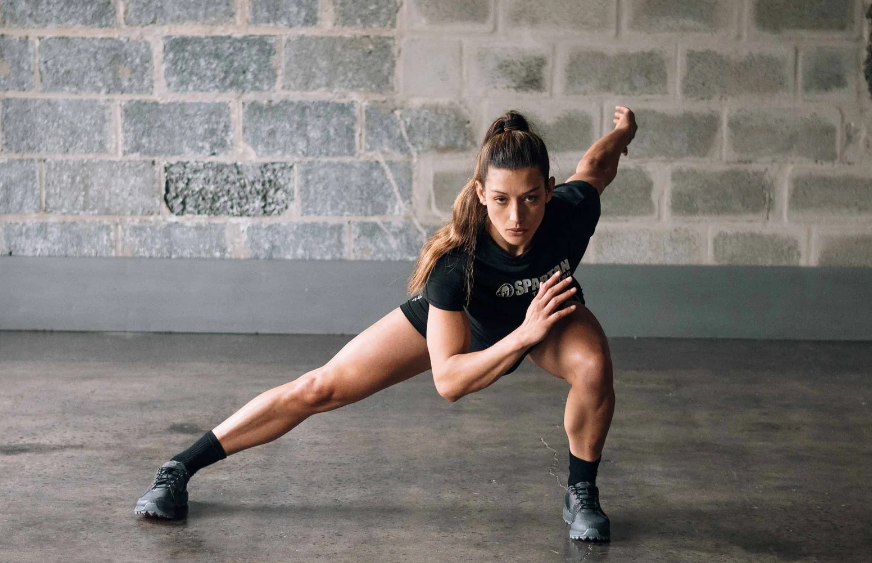
Farmer’s Carries: Functional Strength on the GO
Grip strength, core stability and the capacity to move under load are all needed for lugging groceries, suitcases or children. The farmer’s carry is also beautifully simple yet extremely effective in developing this functional strength. It’s just as it sounds — walking with weights.
Pick up two even weights (dumbbells, kettlebells or heavy bags). Standing tall with weights at your sides, shoulders falling away from ears and core tight. Take smart steps forward with good posture. Stay as neutral as you can, and don’t lean to either side or let your shoulders round forward. Take a brisk walk for an established distance or time, then gently lower the weights to rest.
Begin with light weights and short distances, gradually building up both as you get used to them. Look to walk between 30 and 60 seconds a set, aiming for three or four sets done twice per week. The farmer’s carry not only strengthens your grip, shoulders, core and legs at the same time but it also conditions your body to remain stable while in motion. This directly leads to much easier grocery shopping, lugging luggage through the airport and moving heavy items around your home.
-
🧬 Your hormones control your gains more than you think! Read here: 8 Hormones That Control Your Fitness Progress
Turkish Get-Up: Your Ultimate Full-Body Exercise
The Turkish get-up — apologies if this move appears thorny on first glance, but it’s actually among the smartest functional exercises you can do. It teaches your body to transition from a lying-down position to standing while maintaining control and stability — a movement pattern you perform each time you rise out of bed or off the floor. This is a move that will build funky, crazy strength and mobility throughout your entire body like few others.
Begin by lying on your back, holding a lightweight with your right hand and extending arm to ceiling. Bend your right knee and tap the foot to the floor. Roll over onto your left elbow, and then come up to your left hand. Lift your hips off the floor, sweep your left leg back into a kneeling position and stand up without ever dropping (or lowering) the weight overhead. Reverse the motion to come back down to the floor with control.
This is an advanced move, so start with just your body weight or a very light object, such as a shoe, until you master the movement pattern. Watch teaching videos and practice slowly, emphasizing your ability to transition between positions cleanly. Do three to five reps on each side once or twice a week. The Turkish get-up increases your shoulder stability, core strength and hip mobility while also training your brain and body to work as one coordinated unit.
Wood Chops: Turn Up Twisting Actions
Life is nonlinear — you’re moving and twisting through time. One of the easiest ways to train rotation is through core stability exercises, which will help you move better and feel stronger as a result. Wood chops teach this important movement pattern while enrolling your core, shoulders and hips to work together.
How to: Stand with your feet shoulder-width apart and hold a weight in both hands. Begin with the weight low at your right hip, then rotate and lift diagonally across your body, ending with the weight above your left shoulder. Your feet can turn naturally, and your whole body must be one. With control, bring the weight back down to starting position.
Repeat the same number of split squats on your other side. The action should originate from a twist of your core, rather than just your arms. Begin with a pretty light weight, concentrating on the rotational mechanics rather than the poundage. Do three sets of 10 to 12 reps per side two to three times a week. Your rotational muscles are strong, you do not back up during twists and your sports and games will be better.
Creating Your Functional Fitness Routine
So now that you know these ten solid exercises, let’s move on to how you can implement them in a real workout. You do not necessarily need to complete all ten workouts per session, of course — that would be both time-consuming and completely exhausting. In lieu of, create balanced sessions that target various movement patterns.
One week of that schedule might be as follows:
Weekly Functional Exercise Schedule
| Day | Exercise Focus | Exercises | Duration |
|---|---|---|---|
| Monday | Lower Body & Core | Squats, Lunges, Planks | 30-40 minutes |
| Tuesday | Rest or Light Activity | Walking, Stretching | 20-30 minutes |
| Wednesday | Upper Body & Carry | Push-ups, Rows, Farmer’s Carries | 30-40 minutes |
| Thursday | Rest or Light Activity | Yoga, Swimming | 20-30 minutes |
| Friday | Full Body Power | Deadlifts, Step-ups, Wood Chops | 30-40 minutes |
| Saturday | Optional Skill Practice | Turkish Get-ups, Favorite Exercises | 20-30 minutes |
| Sunday | Rest | Recovery, Meal Prep | — |
Remember that consistency beats intensity. It’s better to exercise just a little and be consistent than to work too hard, get injured and have to sit on the couch immobilized. Never start your workout cold, always warm up with five to ten minutes of light activity — walk, do arm circles, leg swings. When you’re done, cool down with some light stretching, holding each stretch for 20-30 seconds.
Progression and Safety Tips
Your body will adjust and become stronger as you do these moves. Here’s how to progress safely:
You’ll want to begin with the bodyweight versions of each until you can complete them with pristine form for your target number of reps. Form always takes precedence over loading or making the movement more difficult. As your body weight starts to get easy, add resistance slowly (weight should be raised no more than 5-10% a week).
Listen to your body and learn the difference between muscle fatigue (normal) and joint pain (a warning sign). If exercise causes a twinge of sharp pain, stop and ask a health care provider. Some muscle soreness up to 24-48 hours after a workout is also normal, particularly when you are first starting out. But extreme discomfort is not.
Keep track of your workouts in a notebook app on your phone or old-fashioned paper. Keep a log of what exercises you performed, how many sets and repetitions and what weights you used. This allows you to track your progress over weeks and months, while also making sure that you’re always pushing yourself a bit further. Celebrate the small victories — when you can do your first full push-up, when stairs no longer leave you winded, when you can bring in a week’s worth of groceries in one trip.
The Real-Life Benefits You’ll Experience
If you perform these activities daily after some weeks of practice with us you are surprised at the amount of a difference you can see. Parents say they can play with their kids for longer periods of time without feeling exhausted or achy. Back and neck pain from sitting is dramatically reduced for office workers. Older adults (many over age 70) discover they are now able to garden, take trips and engage in other activities that might have been beyond them.
The more you feel stronger, more competent, your confidence level increases. Activities that previously may have seemed challenging, such as resolving to be a prettier or more successful person and matching other people step for step in work, seem doable. You will automatically have better posture when you move and your risk of getting injured doing everyday things will drop dramatically.
Most significantly, perhaps, functional fitness involves a positive cycle. The easier and less painful it is to move, the more you will do so. More movement equals greater health, energy and mood. This including better sleep, weight manage and quality of life.
Frequently Asked Questions
How long for functional exercises to work?
In 2-3 weeks, you will hear people say they feel better in their body and can better deal with stress after practicing consistently. Perhaps you’ll experience that they’re easier to climb, or that it requires less effort to get up off the floor. Visible improvements in the elasticity of the muscles are usually noticeable after 6-8 weeks. Big strength increases typically take 8-12 weeks of consistent training. Don’t forget, the true measure of success is not appearance alone — it’s how much easier your life gets each day.
Is it safe to exercise if I have joint pain or past injuries?
Functional movements can actually decrease pain if performed correctly, however, you should speak with a healthcare provider or physical therapist before beginning one to avoid causing the injury. They may offer adjustments customized for someone with your profile. There are many functional movements that can be modified — if squats hurt your knees, then you adjust a portion of the range; maybe start with partial squats or box squats in which you sit down on a bench before standing up.
Do I have to join a gym to do these exercises?
Absolutely not. All ten of the workout moves in this article can be done at home with little to no equipment. You could always begin by using just your bodyweight, and as you improve, incorporate simple, affordable tools like resistance bands or a set of dumbbells. A stable chair or bench has everything you require for step-ups and elevated push-ups. Home workouts are often more convenient and sustainable for many than gym memberships. For more guidance on home workout setups, check out the American Council on Exercise’s home fitness resources.
How much Should I Do functional exercises in a Week?
For optimal results, we recommend 3-4 workouts a week with at least one day’s rest between sessions training the same muscle groups. This will give your body an opportunity to recover and become stronger. Each workout should take you 30-45 minutes with warm-up and cool down. Even two sessions a week can yield benefits if you’re just beginning. Consistency is more important than volume — a workable plan you’ll adhere to will trump an ambitious one you’ll give up on.
Can functional exercises help you lose weight?
Such exercises burn calories while you do them and build muscle, which causes you to burn more calories even at rest. But exercise alone will not create the calorie deficit you need to lose weight – unless you also tweak your diet. Functional training with healthy diet makes the best recipe. That said, many people discover that as they become stronger and moving gets easier, they tend to be more active throughout the day, which helps with weight control.
What do I eat before and after functional exercise?
Snack on a light preparation of carbohydrate and some protein 1-2 hours before you exercise. Good choices would be a banana and peanut butter, yogurt with berries or even toast with almond butter. Take in protein and carbs within an hour after exercising, to help you recover — a few options are a protein shake, chicken with rice, or Greek yogurt with fruit. Keep well hydrated by sipping water before, during and after any workout.
Your Path To Better Movement Begins Now
Functional fitness is not about being a bodybuilder or elite athlete, it’s about making the activities of daily living easier and more enjoyable to do pain-free. All of the 10 exercises we’ve explored in this series provided you with a complete toolkit to develop real-world strength, balance and coordination. Every movement is directly applicable to what you do in the real world, whether it’s carrying armfuls of groceries, wrestling with friends and family or just strutting through life like you own it.
It may be intimidating to start a new exercise routine, but it is important to remember that every expert was once a beginner. Just concentrate on form and don’t worry about the weight or intensity at this point. Have patience with yourself as your body learns how to move in new ways. Every success, no matter how small, is worth celebrating — whether it’s the first time an exercise feels a little bit less hard, improvement in posture or that daily task that wasn’t completely exhausting.
The great thing about real functional training is seeing the benefits of it in your every day life, as opposed to that number on the scale or reflections in a mirror. You’ll feel it working when you easily lift a heavy box, go up a few flights of stairs without heavy breathing or make it through a busy day without dragging like an old plow horse.
Your body is meant to be in motion, and functional training can help you rediscover that ability. In just a few hours per week of giving your purposeful movements the attention they deserve, you are investing into yourself confident future. You’re not just working out — you’re training for life. Begin with one or two exercises that seem most useful for your day-to-day issues, work on them until they become second nature, then toss in some more. Before you know it, you’ll wake up each day ready to tackle your tasks and enjoy life feeling comfortable, confident and full of energy — something your body has not experienced in years. So start now — your future self will thank you.